
Starting with sound can be simple
If you have a singing bowl or tuning fork but aren’t quite sure what to do with it, you’re not alone. Sound tools can look beautiful and meaningful, but the first time you pick one up, you might wonder: Do I strike it? How long should I use it? Am I doing this right?
You don’t need to be a musician or experienced practitioner to begin. Start with curiosity. Learn how your particular instrument responds, choose a simple intention, and give yourself time to listen.
This guide offers a few gentle ways to start. Every instrument is different, so follow any instructions that came with yours. Think of these ideas as invitations to explore, not a fixed set of rules.
First, get to know your instrument
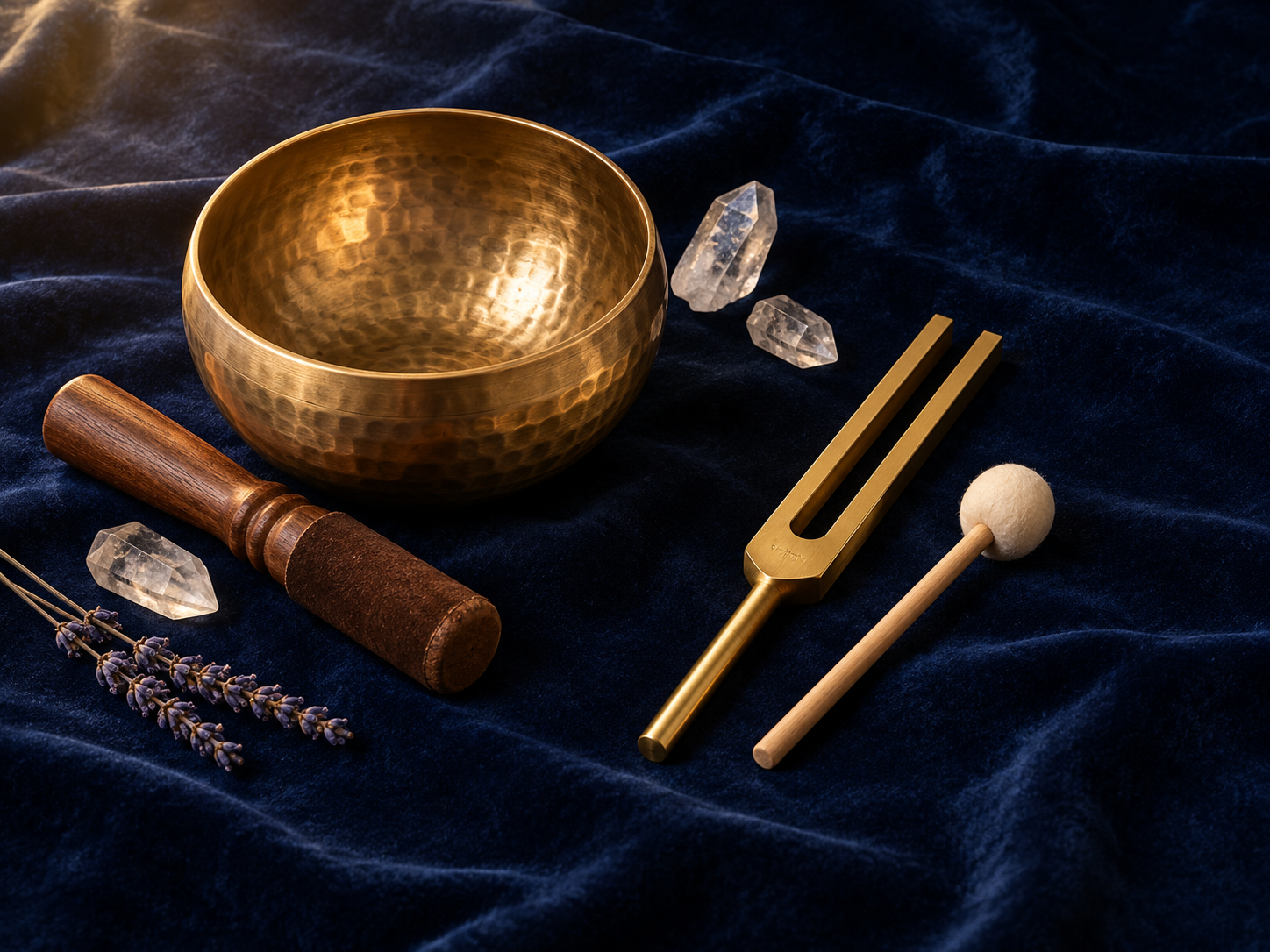
Before you begin a practice, spend a little time noticing the instrument itself. What does it look like? How does it feel to hold or set down? What sounds do you hear when it’s played gently?
A singing bowl and a tuning fork create different sound experiences. A singing bowl’s sound can change depending on the bowl, striker, and playing technique. Research on metal singing bowls describes how their shape, size, mass, alloy, contact point, and playing technique can all affect the sound.
A tuning fork is a metal instrument with two prongs, called tines. When activated, the tines vibrate. A fork’s frequency is measured in hertz, or cycles per second. Frequency relates to pitch, so a higher frequency is generally heard as a higher pitch.
You don’t need to memorize technical details to use either tool. It can be enough to notice which sound you enjoy and what kind of practice you want to build around it.
How to begin with a singing bowl
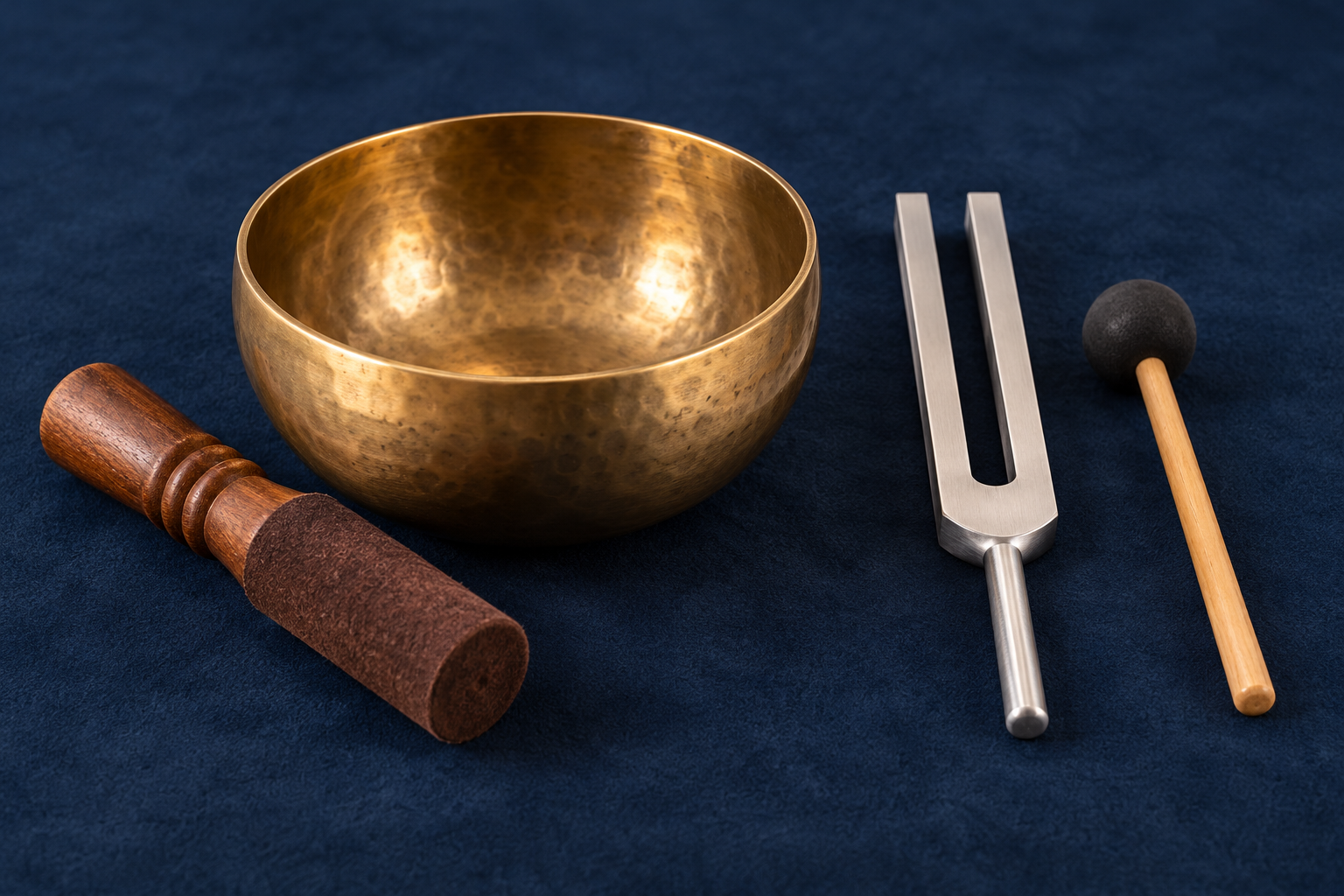
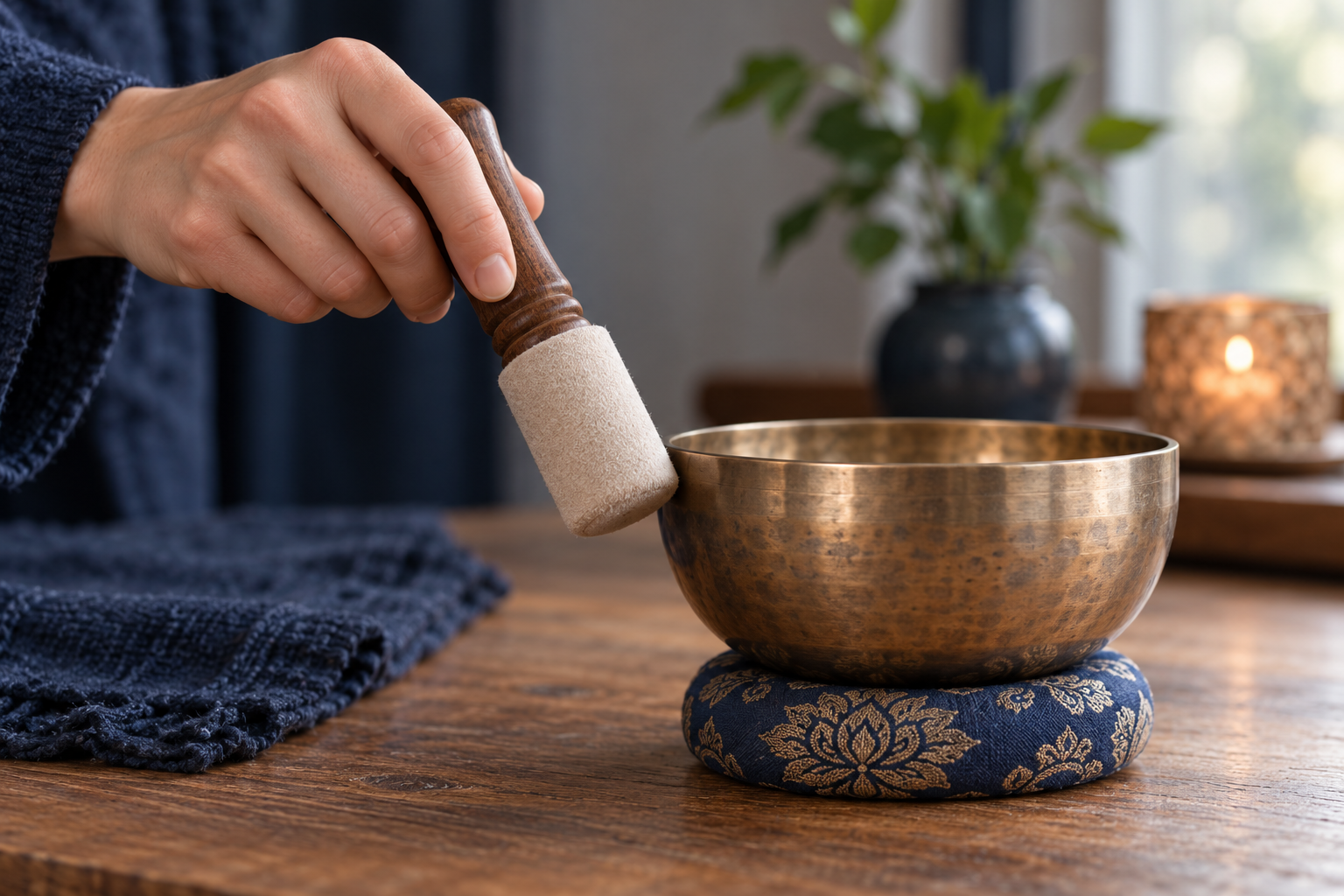
Place the bowl on a stable, soft surface or on the cushion made for it. Make sure there is room around it, then sit comfortably where you can hear the sound without needing to strain.
Try a gentle strike with the striker that came with the bowl. Pause and listen as the sound fades. Notice its tone, how long it lasts, and how you respond to it. You can repeat the gentle strike if you’d like, leaving a little space between sounds.
Some bowls can also be played by moving a striker around the rim. If your bowl is suited to that technique, begin with light, steady contact and follow the maker’s guidance. If the bowl doesn’t produce a continuous tone right away, try adjusting your pressure or speed rather than pressing harder. Different bowls respond differently to striking and rubbing, so patience and a gentle touch can help you learn what works for yours.
If you have a crystal bowl, follow the care and playing instructions for that specific instrument. The materials and construction may differ from a metal bowl, so don’t assume every technique or striker will work the same way.
How to begin with a tuning fork
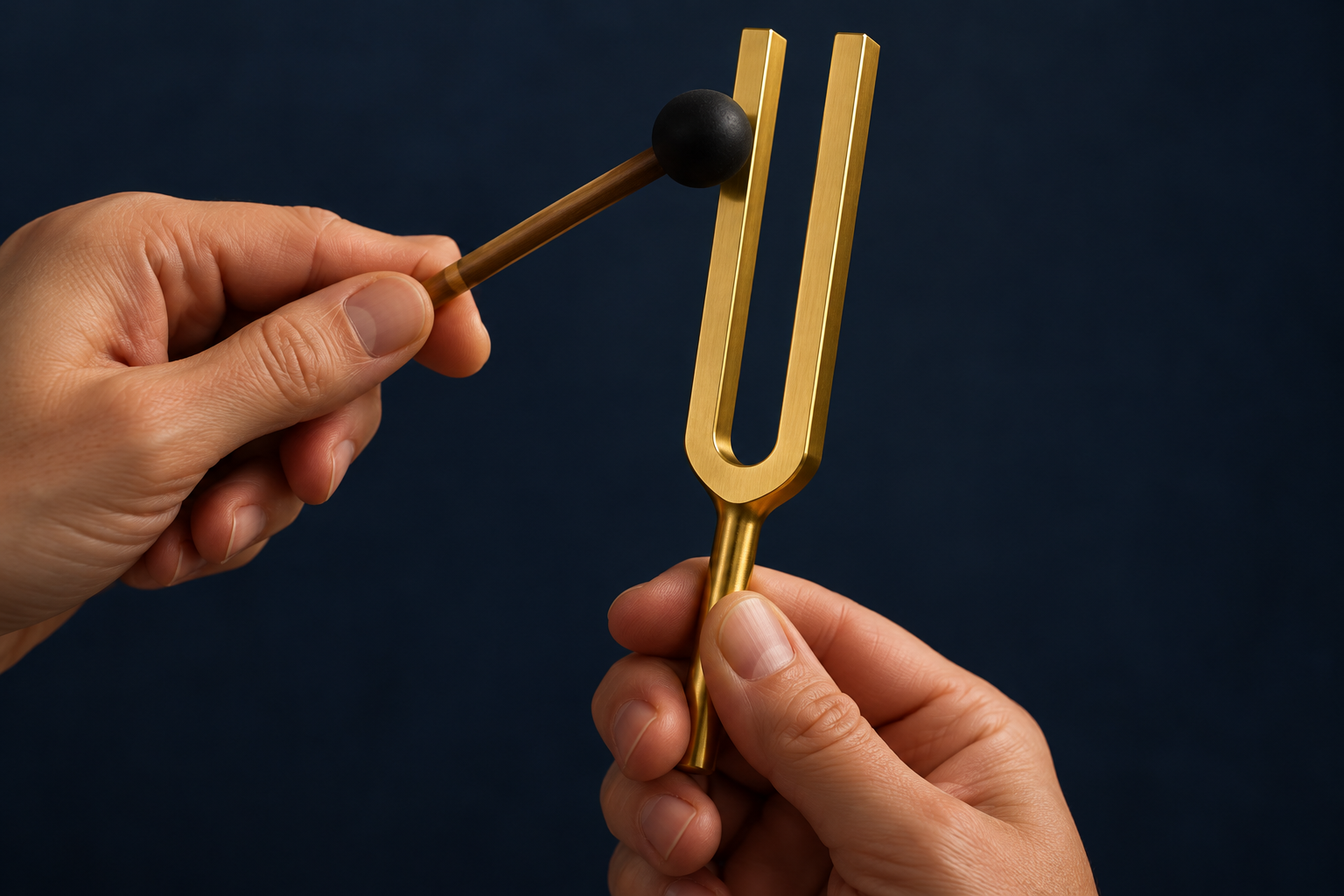
Use the activator or activation method recommended for your fork. A rubber activator is common for some forks. Activate it gently, then pause to listen to the tone as it fades.
If your fork has a frequency marked on it, check the product information to understand what that number refers to. For example, a marking of 256 Hz refers to 256 cycles per second. This describes the fork’s sound frequency. It doesn’t, on its own, tell you how you will experience the sound.
Avoid striking a tuning fork against a hard surface or another fork. Use the appropriate activator and care instructions for your instrument. If you’re new to tuning forks, you can start by listening to the sound nearby rather than trying to use the fork in a more advanced practice.
Set an intention before you play
An intention doesn’t need to be complicated. It can be a simple focus for the time you’re taking for yourself. You might want to pause, make room for reflection, or bring attention to a chakra or emotional focus that feels important to you.
Before you play, ask yourself:
What would I like to focus on right now?
Is there a chakra or emotional focus I want to bring attention to?
What feeling would I like to invite into this practice?
There isn’t a single correct answer. Your intention can change from one day to another. Treat it as a personal reflection, not a promise that a particular instrument or frequency will create a specific result.

A short sound practice to try
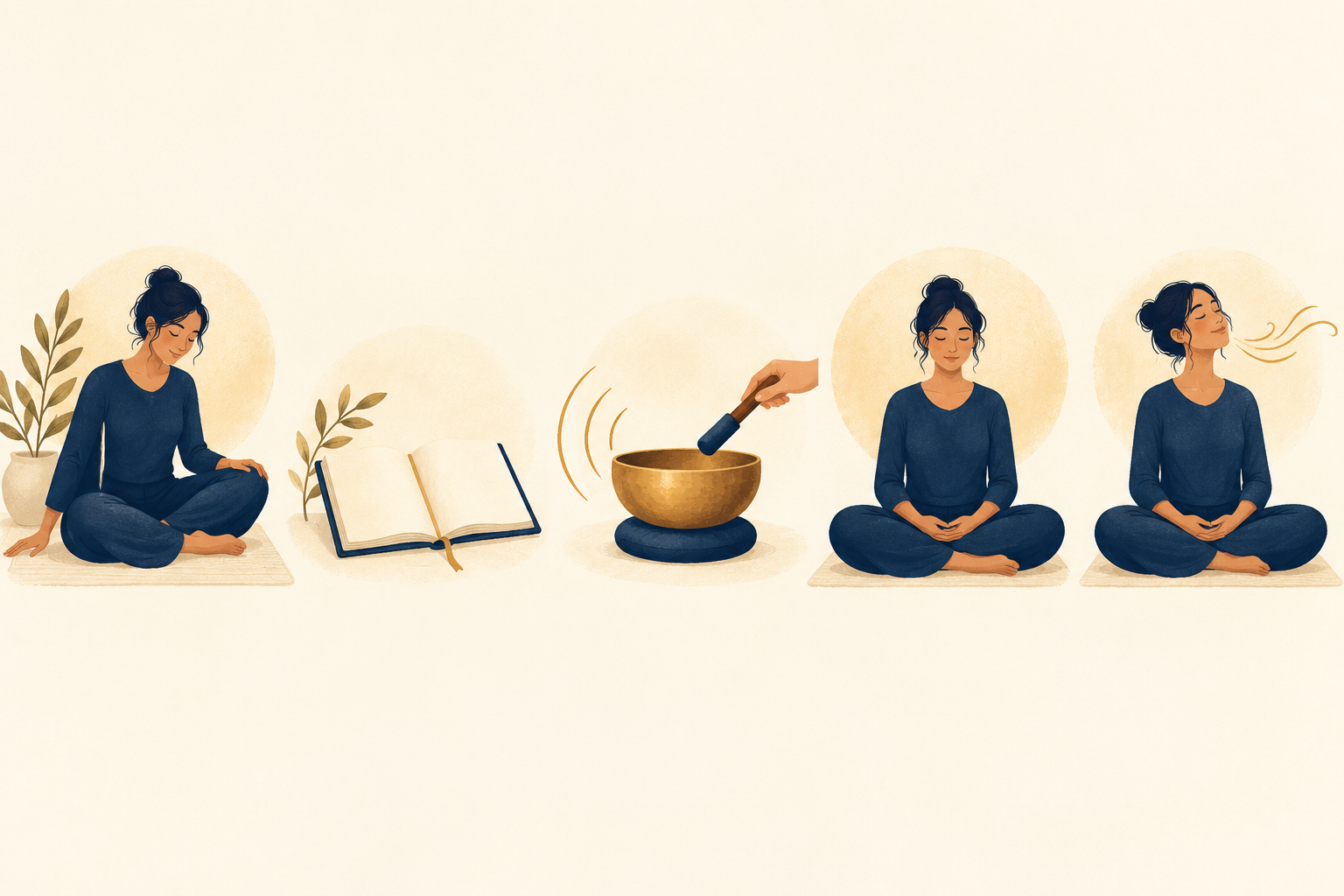
Here’s one simple way to begin. Set aside a few minutes and adjust the steps to suit your space and instrument.
Sit or stand somewhere comfortable.
Take a moment to name an intention or focus.
Play your bowl or tuning fork gently once.
Pause and listen as the sound fades.
Notice what you hear and how the experience feels to you.
Repeat only if you want to.
Close with a breath or a brief note in your journal.
Keep the volume comfortable. If a sound feels unpleasant or overwhelming, stop or move farther away. You can also choose a quieter instrument or a different way to practice.
A sound practice can be a personal ritual for attention and reflection. It isn’t a substitute for medical care or treatment.
Build a practice that feels like yours
If you’d like to make the practice more familiar, keep a short sound journal. Write down which instrument you used, how you played it, what you focused on, and what you noticed. Over time, those notes can help you remember what you enjoy and what you might want to explore next.
You might also try using the instrument at a similar point in your day, such as before journaling or after taking a quiet break. There’s no need to make the practice long. A few intentional minutes can be a meaningful place to start.

When a custom guide can help
Sometimes it helps to have guidance that’s specific to the instrument you’ve chosen and the way you want to use it. At Deva Moon Academy, custom special orders begin with a conversation about the chakra or emotional focus you have in mind, your intention, and the feeling you want to invite.
Those details help Katrina select a crystal or metal bowl, or a tuning fork, with a note and frequency in mind. After the special-ordered instrument arrives, she spends a week or two playing with it and preparing it energetically before it goes to its new owner.
A personalized beginner’s guide and energetic infusion are available as a $99 add-on. The instrument is purchased separately. The guide can be shaped for a personal practice or for a practitioner who wants to use the tool professionally.
Begin with curiosity
Your first sound practice doesn’t need to be perfect. Get to know your instrument, keep the volume comfortable, and give yourself room to notice what you like. Start simply, and let your practice become more personal over time.
If you’re interested in a special-order singing bowl or tuning fork, or you’d like to ask about a custom beginner’s guide, message Deva Moon Academy.
