
What Frequency Actually Means — And Why Every Practitioner Needs to Understand It
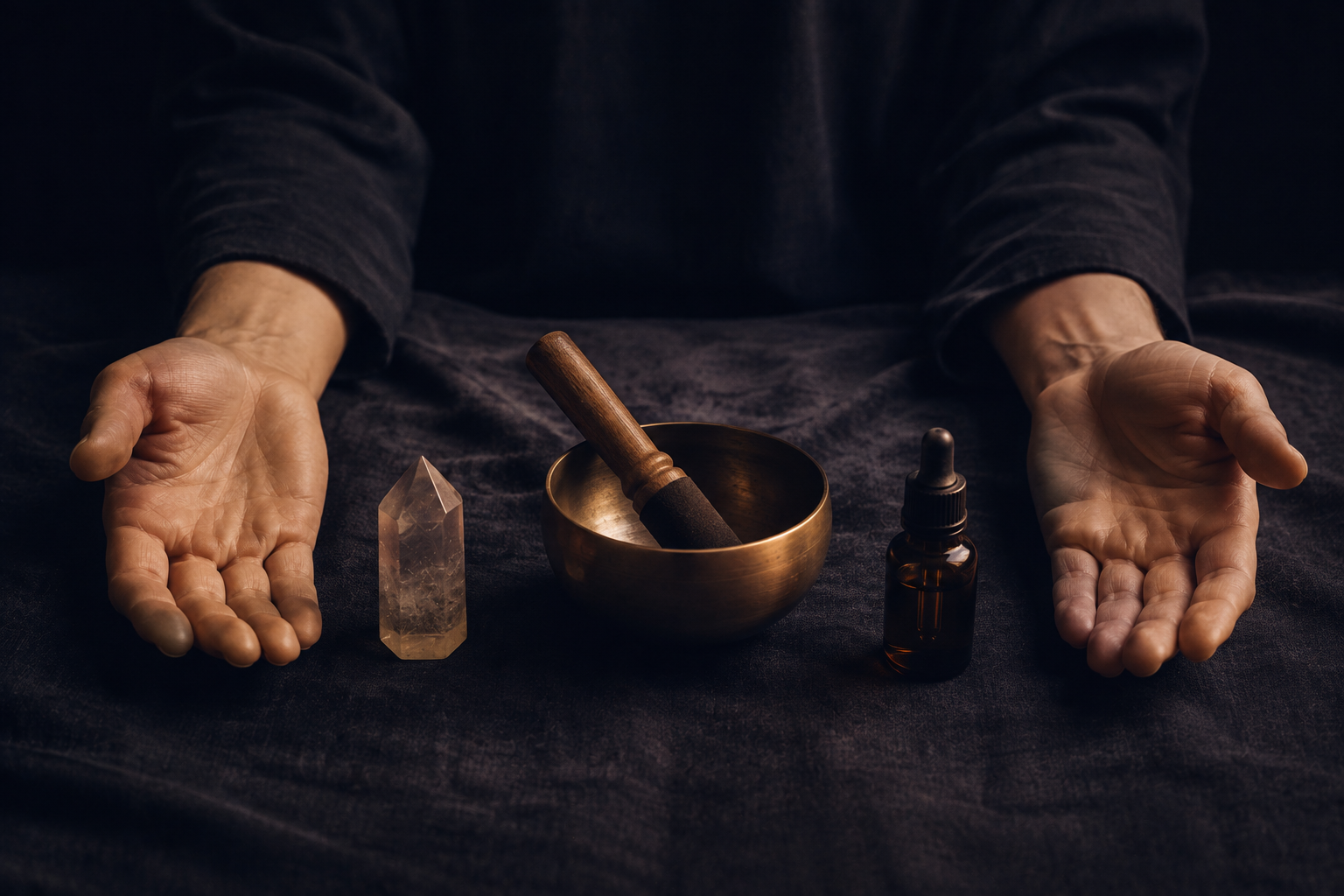
The word frequency gets used constantly in the wellness and healing space. It appears in Instagram captions, in course descriptions, in conversations between practitioners at trade shows and retreats. It gets attached to crystals, to sound bowls, to essential oils, to the chakra system, to the quality of someone's energy on a given day.
And most of the time it is used without any real understanding of what it actually means.
This is not a criticism. It is an observation about what happens when a genuinely important concept gets absorbed into a space faster than the education around it can keep up. The word travels. The understanding does not always travel with it.
So let us slow down and actually look at what frequency is — not as a spiritual concept, not as a wellness buzzword, but as a measurable physical reality that applies directly to every tool, every modality, and every session in an energy healing practice.
What Frequency Actually Is
Frequency is a measurement. Specifically it is the number of times a wave completes one full cycle per second, measured in a unit called Hertz — abbreviated Hz.
Everything in the physical universe vibrates. Every atom, every molecule, every cell, every organ, every piece of matter — at the most fundamental level of physical reality everything is in motion. And that motion produces waves. And those waves have a frequency — a measurable rate at which they complete their cycles.
This is not a spiritual claim. It is basic physics. It is the same physics that explains how radio waves carry sound, how MRI machines produce images of the interior of the body, how light carries color, and how sound carries music. None of those phenomena require belief to work. They operate on measurable, consistent, reproducible physical principles.
What the healing space is doing — what crystal work, sound healing, essential oil therapy, chromotherapy, and chakra work are all engaging with — is the application of those same physical principles to the human body and its energetic field.
That is not a leap of faith. That is a logical extension of well-established science into a domain that mainstream medicine has been slow to fully explore.
The Human Body as a Frequency System
The human body is not a solid object. It is a dynamic, living system of vibrating energy — cells firing, organs pulsing, nerves transmitting, the heart generating the largest electromagnetic field of any organ in the body, the brain producing measurable electrical activity across multiple frequency bands.
Every organ in the body has its own resonant frequency — the rate at which it naturally vibrates when it is functioning optimally. The heart resonates at a different frequency from the liver. The liver resonates at a different frequency from the brain. The brain itself operates across multiple frequency bands — beta waves when we are actively thinking, alpha waves when we are relaxed and receptive, theta waves in deep meditation or the hypnagogic state between waking and sleep, delta waves in deep restorative sleep.
These frequencies are not metaphors. They are measurable with standard medical equipment. An EEG measures brainwave frequency. An EKG measures the electromagnetic frequency of the heartbeat. These are the same instruments used in hospitals every day.
When we talk about frequency in healing work we are talking about the same underlying reality — measurable energy patterns in living systems — through the lens of modalities that engage with those patterns in ways that conventional medicine has not yet fully integrated.
What Happens When Frequencies Meet
Here is where the practical application of frequency literacy becomes most important for practitioners.
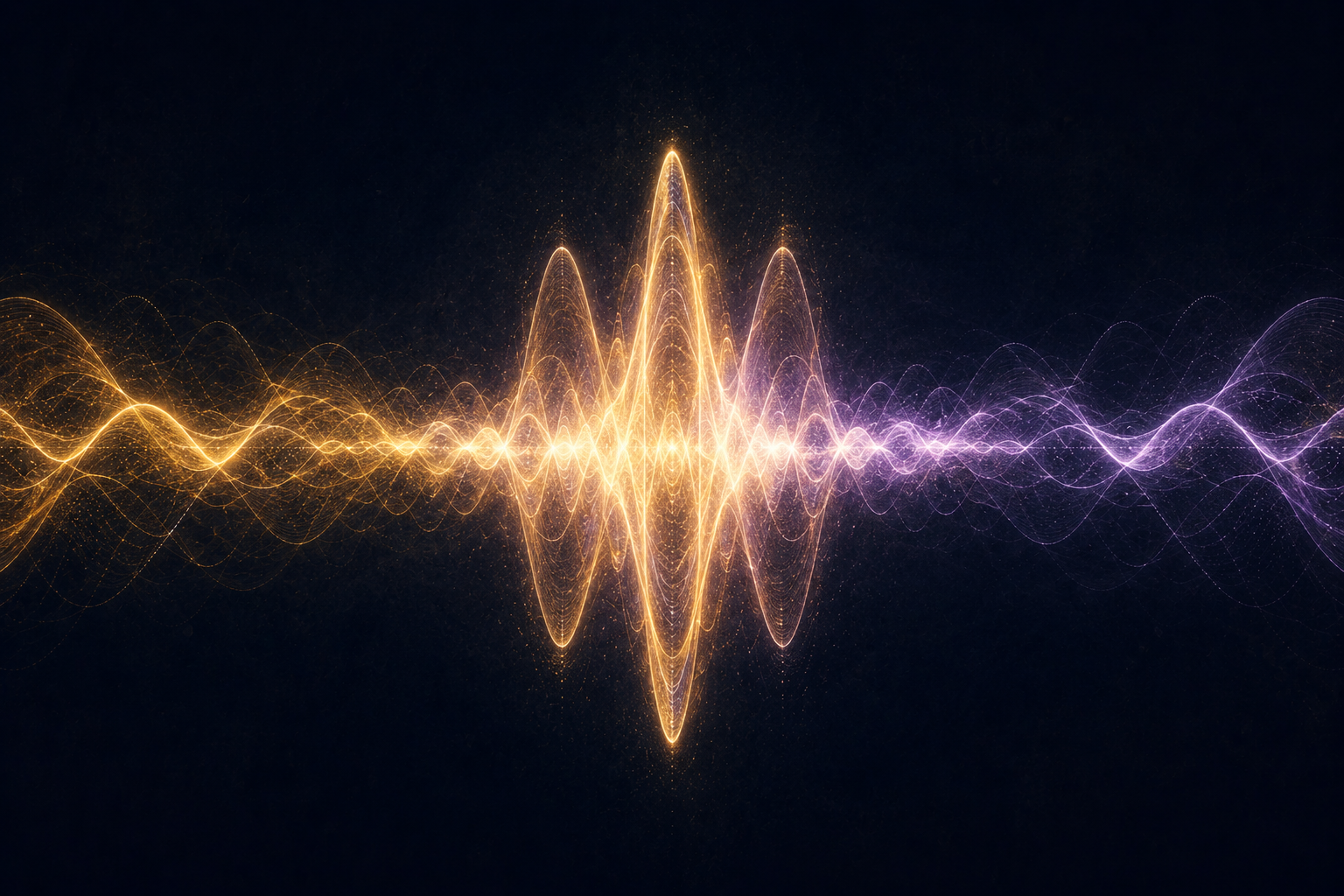
When two frequencies come into contact they interact. And that interaction produces one of three outcomes.
The first is resonance — when two frequencies match and reinforce each other, creating a stronger, more coherent signal than either one produced alone. This is the principle behind the therapeutic use of tuning forks, singing bowls, and other sound healing instruments. When an instrument tuned to a specific frequency is introduced into a session the body's own frequency responds — moving toward resonance with the external frequency. This is the mechanism behind sound healing. Not magic. Physics.
The second is entrainment — when a stronger, more stable frequency causes a weaker, less organized frequency to synchronize with it over time. The classic example is Christiaan Huygens' observation in 1665 that pendulum clocks on the same wall would eventually synchronize their swings without any physical contact — the vibration moving through the wall caused them to entrain to the same frequency. In healing work entrainment is what happens when a well-regulated practitioner holds space for a dysregulated client — the stability and coherence of the practitioner's field offers the client's field a stronger frequency to entrain toward.
The third is interference — when two frequencies conflict rather than align, producing a disrupted, incoherent signal rather than a coherent one. This is what happens when incompatible crystal combinations are placed together on a client, when a bowl is played at a frequency that conflicts with the client's current state, or when an essential oil is introduced into a session without understanding how its frequency interacts with the frequencies already present.
Understanding these three outcomes — resonance, entrainment, and interference — is the practical foundation of frequency literacy in therapeutic healing work.
Crystal Frequency
Every crystal has a measurable resonant frequency determined by its molecular structure, its atomic composition, its geometric lattice, and the conditions under which it formed.
This is why different crystals feel different when you hold them. Not just different in texture or temperature — different in a way that experienced practitioners and many clients describe as a distinct energetic quality. That quality is real. It is the expression of the crystal's frequency interacting with your own.
What most practitioners are never taught is that a crystal's frequency does not simply exist in isolation. It interacts with whatever field it enters. Which means the same crystal can produce very different experiences in different clients depending on their current energetic state, their capacity to receive, and whether the crystal's frequency is supportive or conflicting for what is already present in their field.
Clear quartz amplifies — which means it amplifies everything, including what you do not want amplified. Black tourmaline grounds and protects — but used on a nervous system that is already in shutdown it can deepen withdrawal rather than create safety. Moldavite accelerates transformation at a rate most nervous systems are not prepared for and is not appropriate for every client regardless of how drawn they feel to it.
Frequency literacy with crystals means knowing not just what a stone is associated with but what it actually does to the field it enters — and when using it is contraindicated.
Sound Frequency
Sound is frequency made audible. The specific pitch of a note — whether from a voice, an instrument, or a singing bowl — is determined by the frequency of the sound waves it produces.
The human ear can detect frequencies between approximately 20 Hz and 20,000 Hz. But sound affects the body at frequencies both within and beyond that range. Infrasound — frequencies below 20 Hz — affects the nervous system even when it cannot be consciously heard. The deep resonance of large Tibetan bowls operates in this range and is part of why their effect on the body feels so physically palpable.
Different frequencies affect different physiological systems. Low frequencies — below 100 Hz — have a grounding, slowing, and deeply settling effect on the nervous system. Mid-range frequencies interact with the respiratory and cardiovascular systems. Higher frequencies tend to activate and clarify rather than ground and settle.
This is why tuning matters in sound healing. A bowl played without knowledge of its frequency is not a therapeutic instrument — it is a pleasant sound. A bowl played with full understanding of what frequency it carries, how that frequency interacts with the nervous system, and what the client's current state requires from the session — that is sound healing practiced as a genuine therapeutic discipline.
Essential Oil Frequency
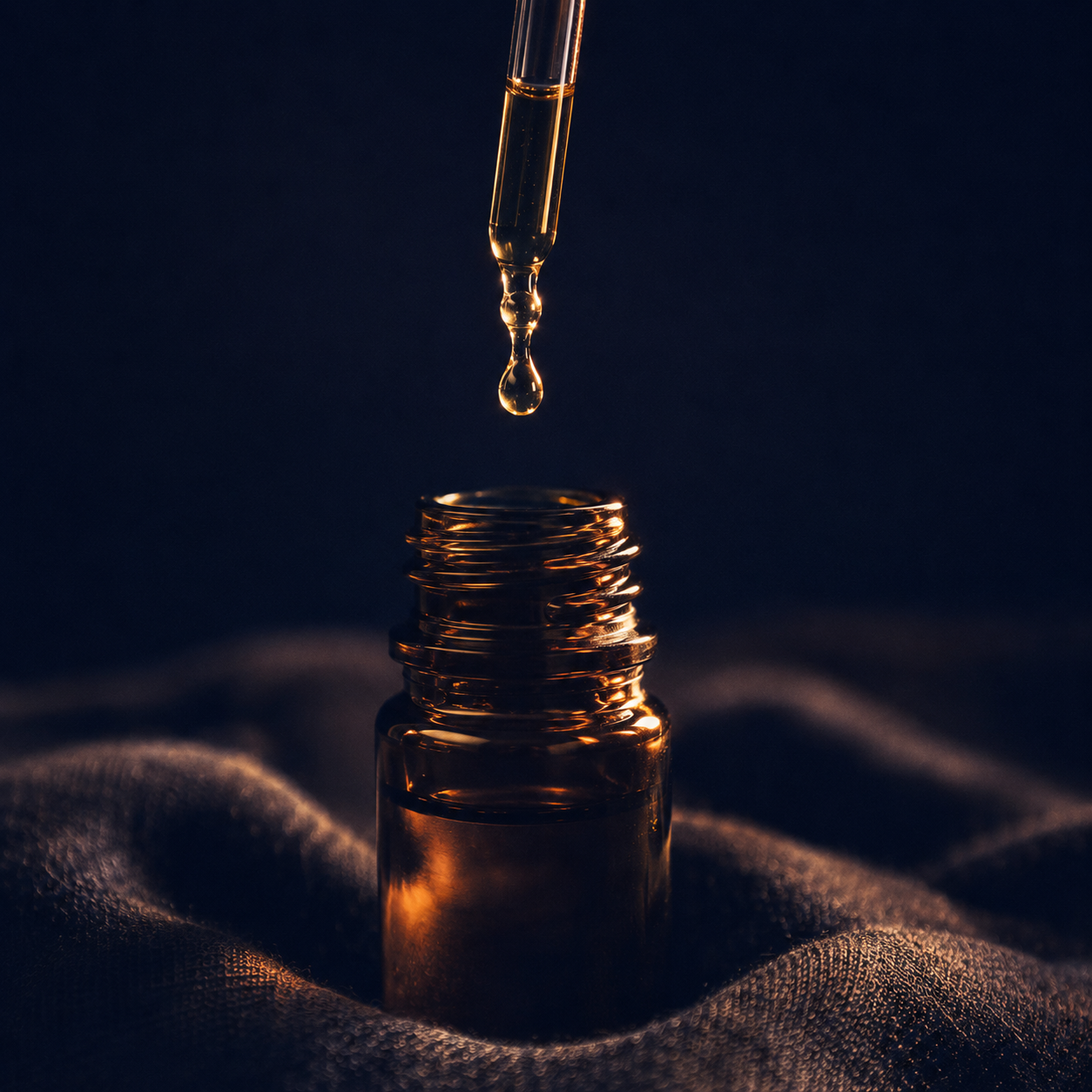
Essential oils carry measurable electromagnetic frequencies — and the range varies significantly between oils and between quality grades of the same oil.
Research in this area, while not yet mainstream in conventional medicine, has produced measurable data showing that therapeutic-grade essential oils carry frequencies ranging from approximately 52 MHz for common basil to 320 MHz for rose oil. Frankincense — one of the most widely used oils in healing practice — measures at approximately 147 MHz.
What these measurements mean practically is that when an essential oil is introduced into a session its frequency interacts with the body's own electromagnetic field. High-frequency oils tend to support coherence, cellular function, and the kind of nervous system regulation that makes deeper energetic work more accessible. Low-frequency or synthetic oils carry no therapeutic frequency at all — they may smell like their natural counterparts but they do not interact with the body's field in the same way.
This is why the distinction between therapeutic-grade and cosmetic-grade essential oils is not a marketing difference. It is a frequency difference. And it has direct implications for the therapeutic effectiveness of any session in which oils are used.
Color Frequency
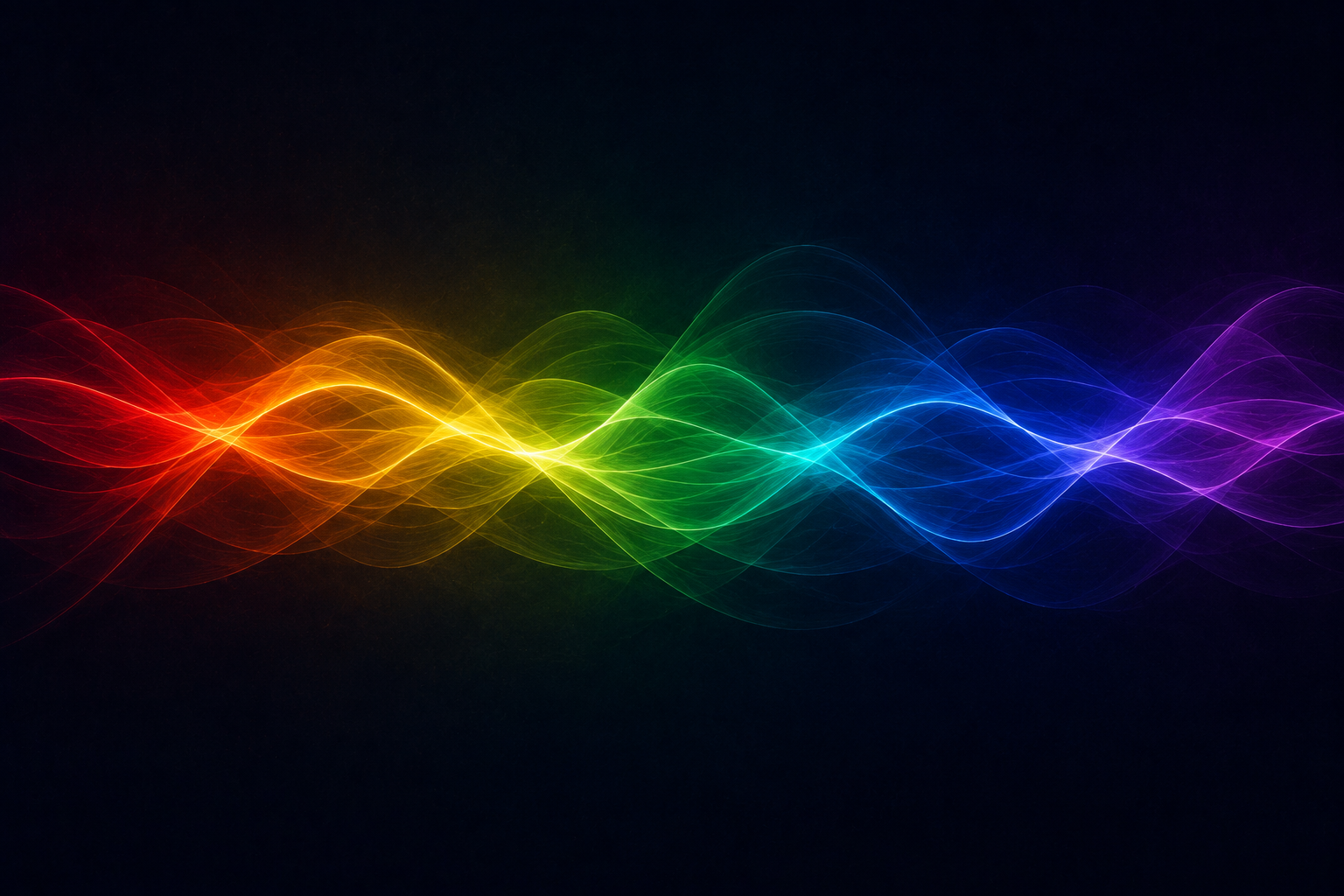
Color is frequency made visible. The electromagnetic spectrum that human eyes can perceive — visible light — ranges from approximately 400 terahertz at the red end to approximately 790 terahertz at the violet end.
Each color corresponds to a specific, measurable frequency of light. Red is the lowest frequency of visible light. Violet is the highest. The association between violet and the crown chakra — or between red and the root chakra — is not arbitrary symbolism. It is a reflection of the actual frequency relationship between the colors and the energy centers of the body.
This is the scientific foundation of chromotherapy — the therapeutic use of color and light frequencies to influence the body's physiological and energetic state. It is used in neonatal care, in wound healing research, and in photobiomodulation therapy. It is not alternative medicine dressed in scientific language. It is an application of well-established electromagnetic physics to biological systems.
Chakra Frequency
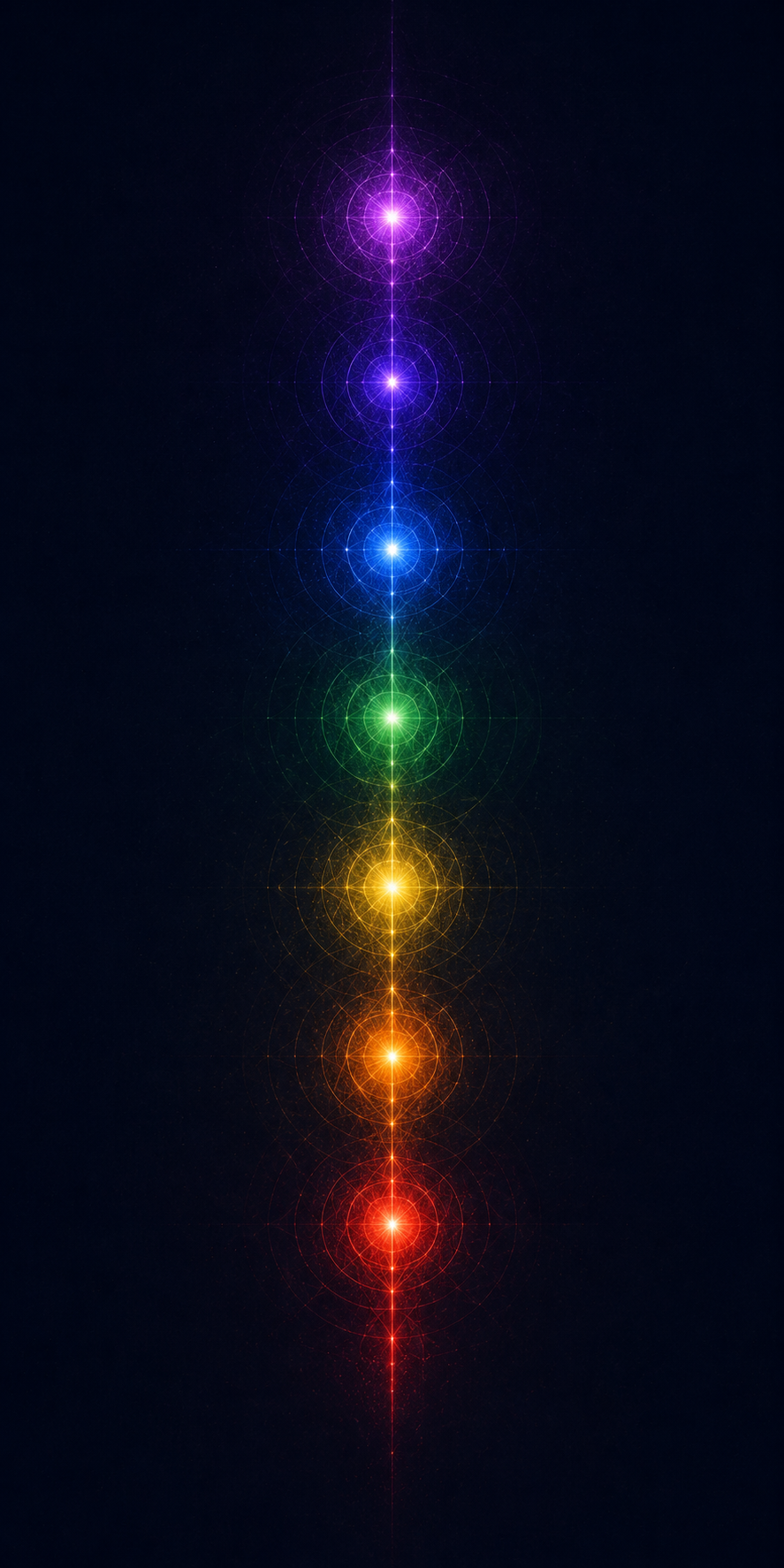
The chakra system describes seven primary energy centers in the body — each one associated with specific physiological functions, emotional patterns, and a measurable frequency range.
The root chakra, associated with survival and grounding, resonates at the lowest frequency range of the system — approximately 256 Hz in sound correlation. The crown chakra, associated with spiritual connection and expanded awareness, resonates at the highest — approximately 963 Hz in the solfeggio frequency system.
These are not invented associations. They reflect the actual relationship between the physical location of each energy center, the organs and systems it is associated with, and the frequency range that resonates most coherently with that level of the body's energetic field.
What this means practically is that chakra work is frequency work. When a practitioner works with the root chakra they are working with the specific frequency range that governs the body's most fundamental relationship with safety, survival, and physical groundedness. When they work with the heart chakra they are working with the frequency range that governs love, connection, and the integration of the lower and upper energy centers. Knowing the frequency dimension of each center — not just its symbolic associations — is what makes chakra work genuinely therapeutic rather than conceptually appealing.
Why Every Practitioner Needs This
Here is the honest reality of where the healing space is right now.
There are practitioners using crystals, sound bowls, essential oils, and color therapy who cannot tell you the measurable frequency of any tool they are using. Who do not know how those frequencies interact with each other or with the nervous system of the client receiving them. Who are making placement decisions based on aesthetic preference, intuitive impulse, or the crystal association list they memorized in a weekend course.
And some of those practitioners are producing genuinely positive results — because intuition is real, because intention matters, and because the tools themselves carry frequency whether the practitioner understands it or not.
But here is the problem. A tool that carries frequency interacts with the client's field whether the practitioner intends it to or not. Clear quartz amplifies whether you know that or not. A bowl at the wrong frequency for the client's current state creates interference whether you understand the mechanism or not. An essential oil that conflicts with another oil in the space creates frequency disruption whether you are aware of it or not.
The practitioner's ignorance of the mechanism does not protect the client from its effects.
This is why frequency literacy is not advanced knowledge for serious practitioners. It is the baseline. It is the level of understanding that should precede any session in which frequency tools are introduced into another person's field.
This is the standard Deva Moon Academy is built around. Not because frequency is complicated — once you understand the underlying principles it is actually a deeply logical and coherent system. But because the people who trust us with their bodies and their energy deserve practitioners who have taken the time to understand what they are actually doing.
Where to Begin
If this post opened something in you — if it named a gap in your foundational knowledge that you want to address — here is where to start.
Begin with the tools you already use. Whatever crystals, instruments, or oils are currently part of your practice — go deeper than the association. Research the measurable frequency. Understand the mechanism by which it interacts with the body. Learn the contraindications. Build a genuine knowledge base around what you are already working with before you add anything new.
Then — and this is the part most practitioners skip — do your own inner work. Frequency literacy is cognitive knowledge. But the quality of presence you bring to a session, the coherence of your own field, the clarity with which your intuition operates — those come from somewhere else. They come from the ongoing, honest, sometimes uncomfortable work of knowing yourself.
Both are necessary. The knowledge without the inner work produces practitioners who are technically informed but lack genuine perception. The inner work without the knowledge produces practitioners who are sensitively attuned but cannot be fully trusted with someone else's nervous system.
Deva Moon Academy is built to give you both.
Come find us. 🌙
Sign up to our newsletter through the link in bio for weekly frequency education and ongoing practitioner resources from Deva Moon Academy.
