
Before You Play a Singing Bowl on a Client — Read This
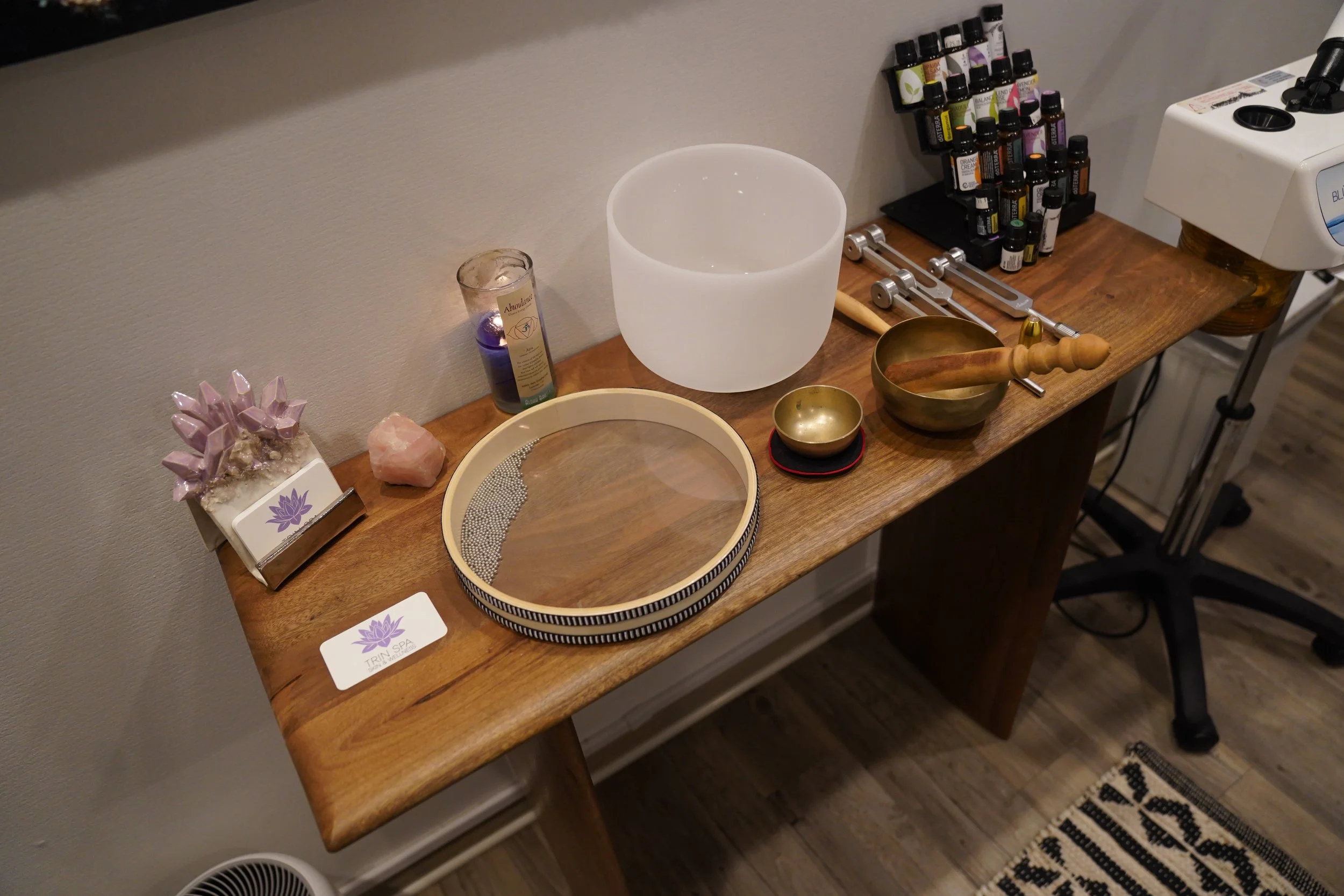
Most practitioners who offer sound healing in their sessions learned how from a YouTube video, a weekend workshop, or another practitioner who also learned from a YouTube video or a weekend workshop.
There is nothing inherently wrong with that. Knowledge travels the way it travels. But somewhere in the transmission, a critical piece got dropped — and it is the piece that matters most the moment someone lies down on your table and trusts you with their nervous system.
That piece is this: a singing bowl is not a prop. It is not ambiance. It is not a beautiful addition to your treatment room that will gently enhance the mood and do no harm.
It is a frequency tool. And frequency tools used without knowledge, without assessment, and without understanding of what they are actually doing to the body are not neutral. They are unpredictable. And unpredictable in a healing context means potentially harmful.
This is the conversation the sound healing space is not having loudly enough. And it is one I am going to keep having — because the people who lie on our tables deserve practitioners who actually understand what they are working with.

Sound Is Not Ambiance
Let's start with the most fundamental misunderstanding in the sound healing space.
Sound healing is not relaxing music. It is not a Spotify playlist with singing bowls in the background. It is not the gentle ambient tone that fills a treatment room and makes the atmosphere feel more spiritual.
Sound frequency produces a measurable physiological response in the body. In the nervous system. In the cells. In the emotional field. In the brain.
When you introduce a sound frequency into a session you are not just setting a mood. You are interacting with another person's nervous system — whether you intend to or not. Whether you understand it or not. Whether you have assessed their readiness to receive it or not.
This is the physical reality of sound healing. And it is the foundation every practitioner needs before they pick up a single bowl.
What Your Bowl Is Actually Doing
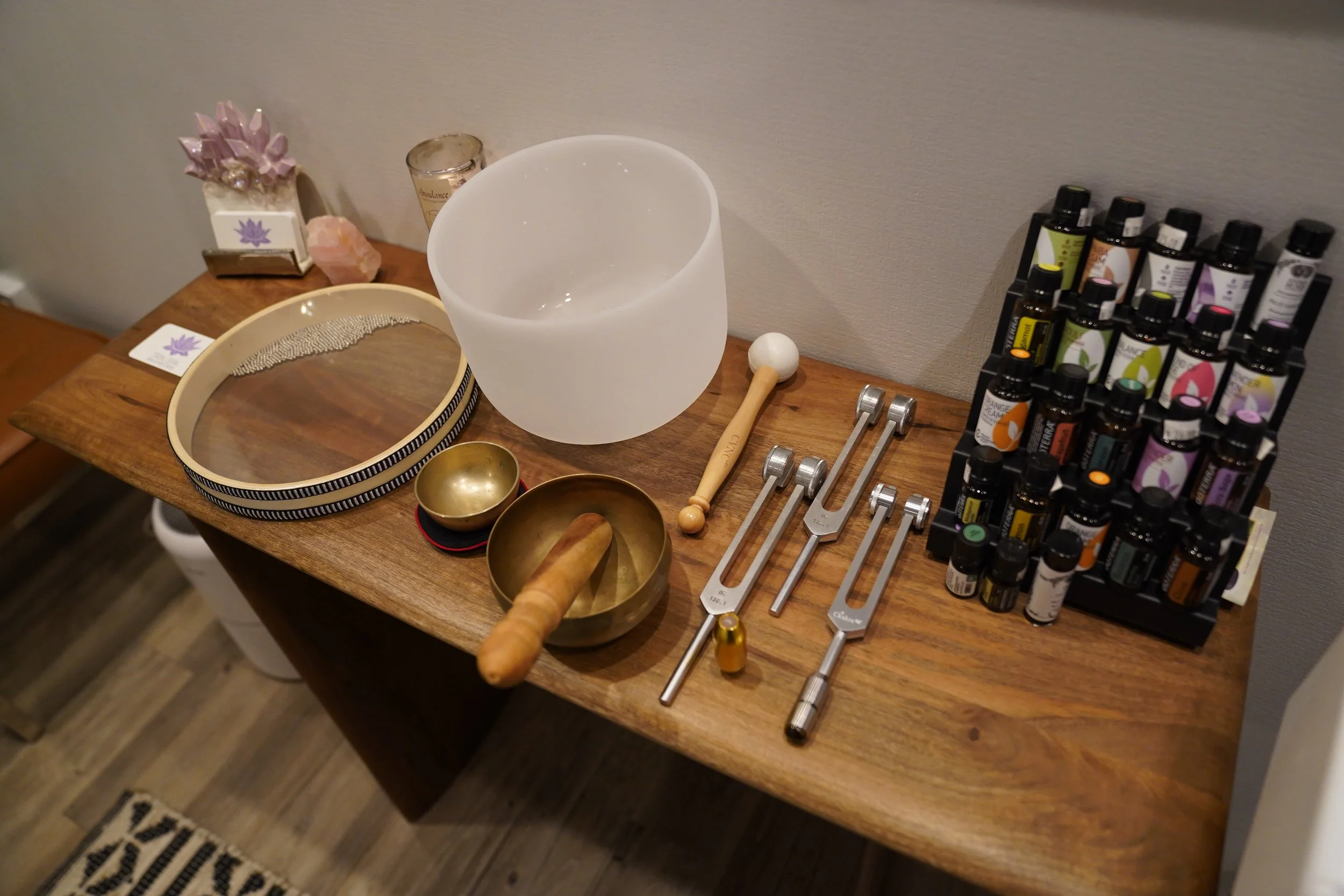
Every singing bowl carries a specific frequency — determined by its size, its material, its thickness, and critically, whether it has been properly tuned. That frequency interacts with the body's own electromagnetic field in specific, measurable ways.
Depending on the bowl and the state of the person receiving it, that interaction might do any of the following.
It might regulate and slow the nervous system down — bringing the body into a calmer, more receptive state. It might activate and accelerate energy movement — increasing circulation through the energy centers and bringing stored material toward the surface. It might amplify whatever emotional or energetic state is already present. Or it might create a kind of frequency conflict — an interaction between the bowl's tone and the client's current state that produces confusion, agitation, or overwhelm rather than the intended effect.
That last possibility is the one that gets almost no attention in standard sound healing education. And it is the one responsible for most of the unintended harm that happens in sound sessions.
The amplification effect is particularly worth understanding. A bowl does not discriminate between what it amplifies. It responds to what is present in the field. Which means if a client arrives carrying unprocessed grief, anxiety, or emotional overwhelm just beneath the surface — the wrong bowl at the wrong moment does not soothe that material. It turns up the volume on it.
The Tuning Problem Nobody Talks About
Here is something most practitioners who use singing bowls were never taught.
Not all bowls are equal. Not even close.
The wellness industry has made it incredibly easy to purchase a beautiful singing bowl online, receive it within a few days, and begin incorporating it into sessions immediately. The bowl looks stunning. It sounds resonant. Clients seem to respond to it. Everything appears to be working.
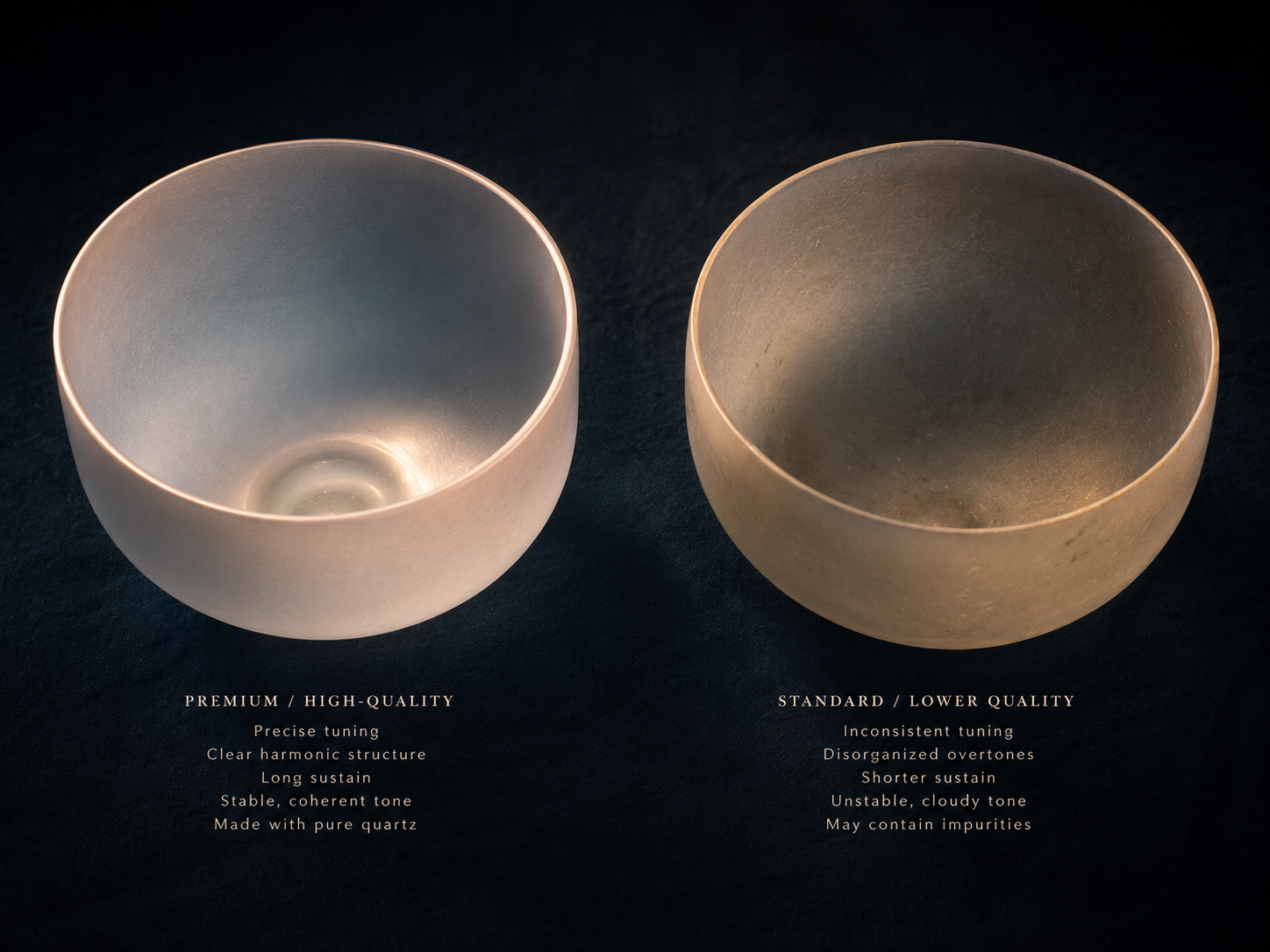
But if that bowl was not properly tuned — if it does not carry a specific, intentional frequency — it is not a therapeutic tool. It is a decorative object that produces a pleasant sound. And using it in a healing session as though it were a tuned therapeutic instrument is not harmless. It is unpredictable.
A properly tuned bowl carries a frequency that has been calibrated with therapeutic intention. It resonates at a specific tone that interacts with the body in a specific, predictable way. An untuned bowl carries whatever frequency its manufacturing process happened to produce — which may be pleasant to the ear but has no reliable therapeutic effect and may in some cases create interference rather than coherence in the client's field.
Knowing whether your bowl is tuned — and what frequency it carries — is not advanced knowledge for serious sound healers. It is the baseline.
Crystal Bowls vs Metal Bowls — They Are Not Interchangeable
Another dimension of sound healing education that rarely gets covered is the fundamental difference between crystal singing bowls and metal singing bowls — and why the two are not interchangeable in therapeutic practice.
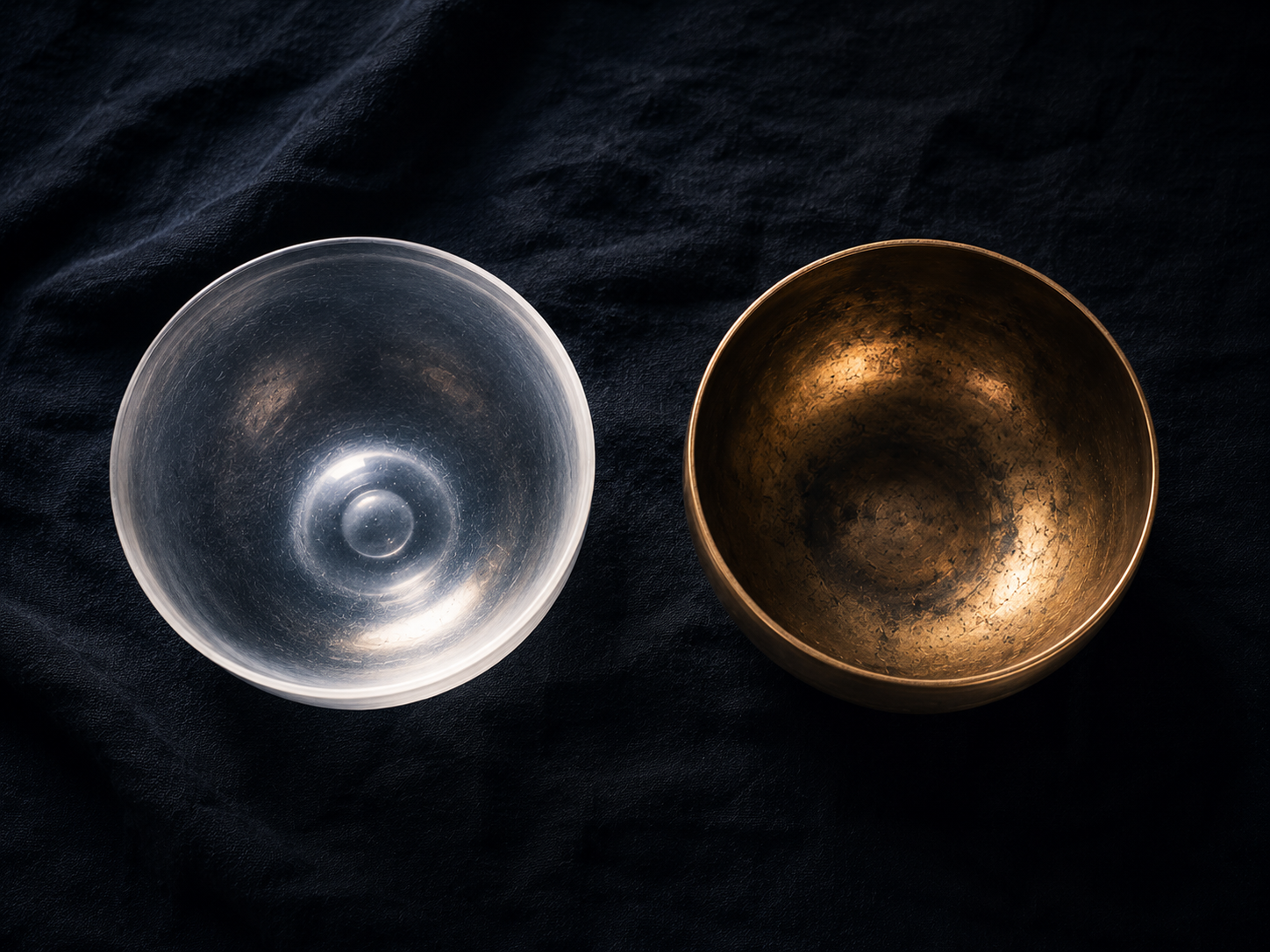
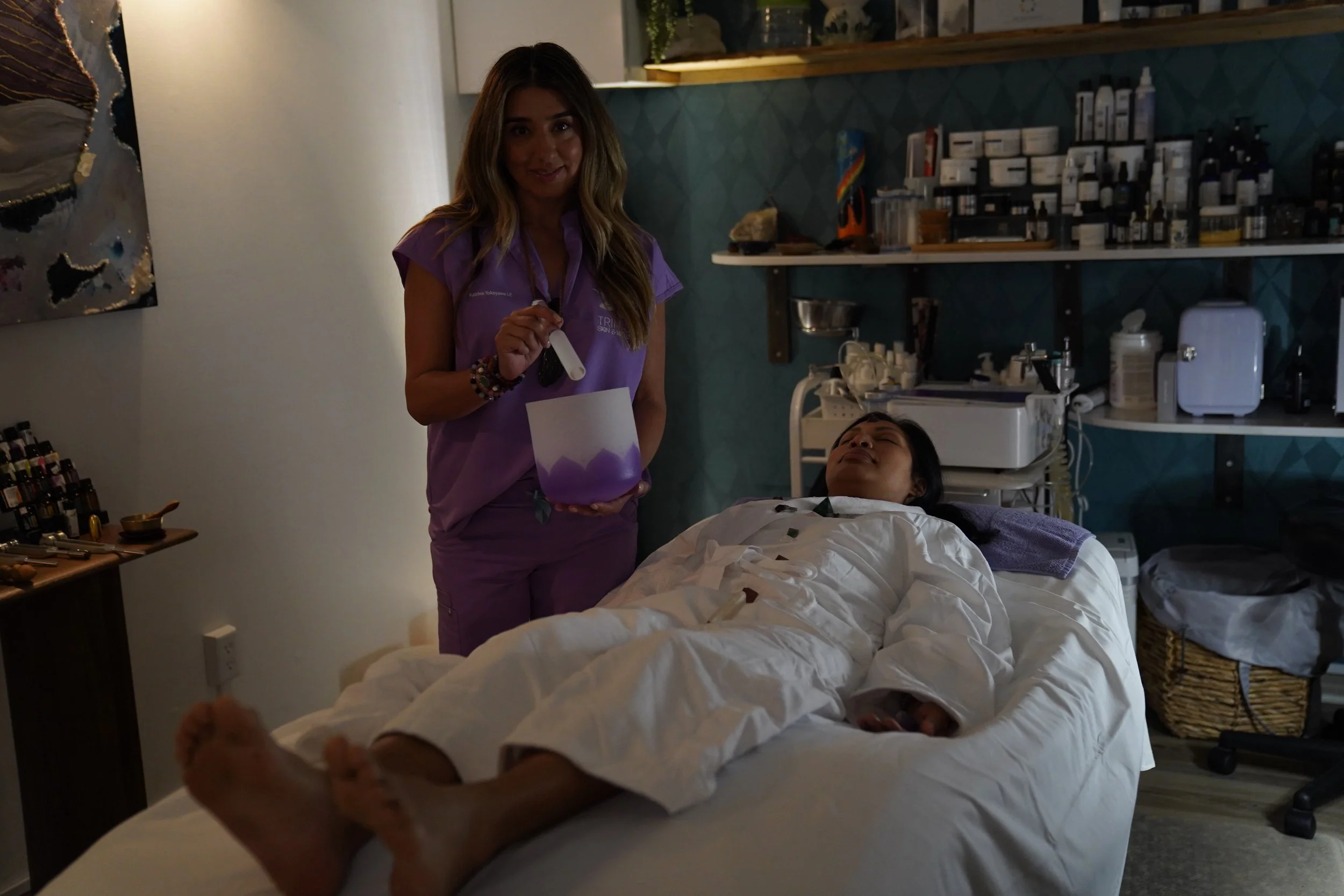
Crystal bowls are made from quartz crystal and carry a frequency that interacts strongly with the body's energy field. They tend to produce a sustained, penetrating tone that moves deeply through the field and can initiate significant energetic shifts. They are powerful tools — and they require the same level of assessment and intentionality as any other high-frequency instrument.
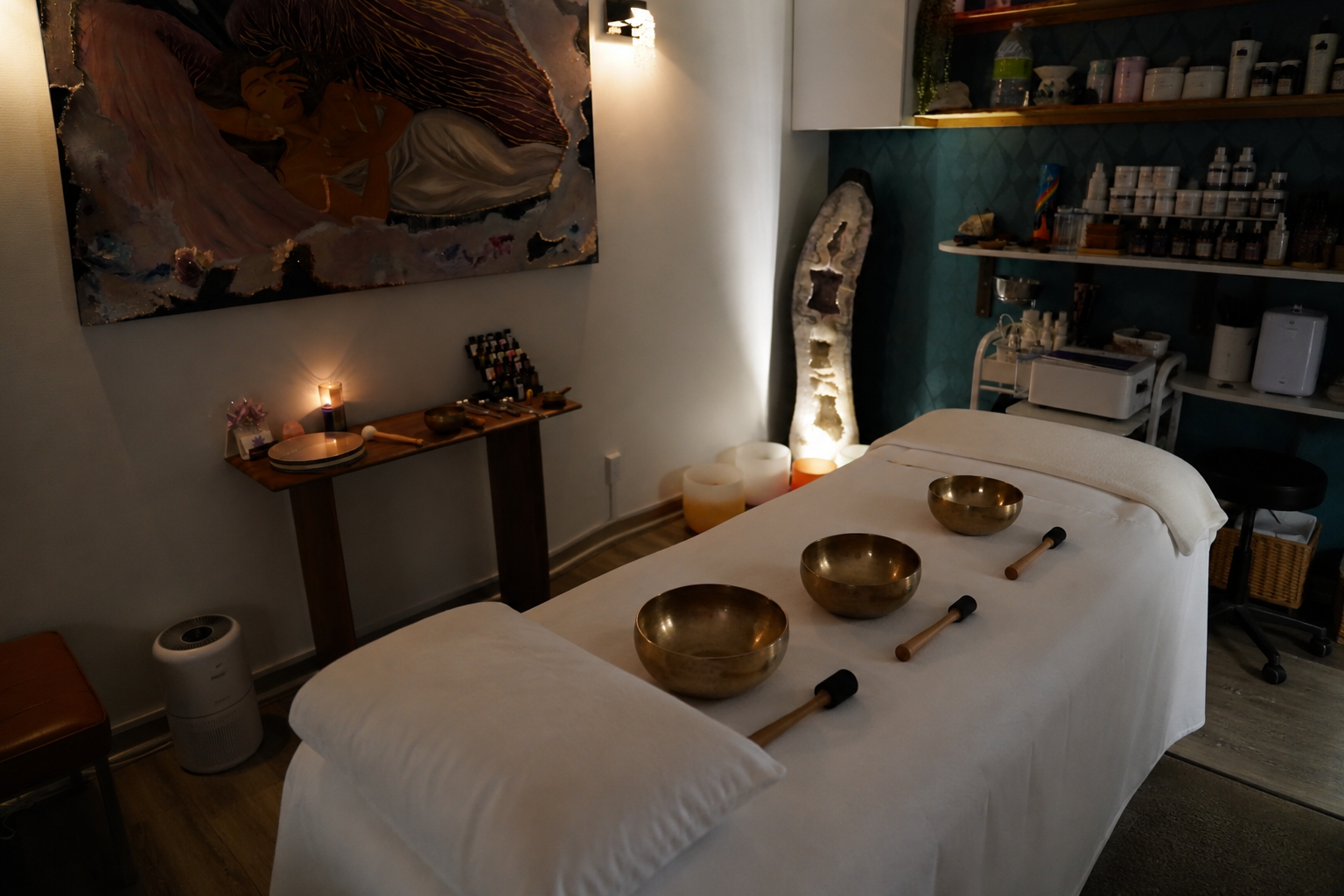
Metal bowls — traditional Himalayan or Tibetan bowls — carry a different quality of frequency. Their tone is warmer, more complex, and often more grounding in its effect on the nervous system. They tend to work more gently and are often more appropriate for clients who are dysregulated, highly sensitive, or new to sound healing.
Choosing between them is not an aesthetic decision. It is a therapeutic one — based on what the client's nervous system needs today, what the session is designed to support, and what the practitioner understands about how each instrument interacts with the body.
Assessment Before Sound — Every Single Time
This is the most important section of this entire post.
Before you pick up a bowl. Before you place it near a client's body. Before you introduce any sound frequency into a session — you need to read the person in front of you.
Not based on what they booked. Not based on what worked in your last session with them. In real time, on this specific day, with everything their nervous system is currently carrying.
How did they walk in? Is their energy settled or scattered? Is their breath shallow or full? Are their shoulders carrying tension? Is there a quality of activation or agitation beneath the surface that they may not have named yet?
A client who arrives regulated and resourced can receive sound work that moves them deeply. A client who arrives activated, anxious, or energetically fragile needs something slower and gentler — or may not be ready for sound work at all that session.
The same bowl that regulates one nervous system can overwhelm another. The same session that produces profound release for one client can destabilize another who was not ready to be opened.
The difference between those two outcomes is almost entirely in the assessment that happens before the session begins.
Sound can regulate. It can also overwhelm. And the practitioner's ability to read which one a client needs — and to respond accordingly — is what separates therapeutic sound work from well-intentioned but potentially harmful performance.

Contraindications — What Nobody Told You
Every frequency tool has contraindications. Sound is no exception.
There are client states and conditions under which sound healing — particularly high-frequency, high-intensity sound — is contraindicated or should be approached with significant caution.
Clients in acute trauma responses or severe emotional flooding are not candidates for sound activation. The nervous system in that state is already overwhelmed and does not need additional frequency input — it needs grounding, regulation, and gentle support back to a baseline.
Clients experiencing dissociation — who feel disconnected from their body or not fully present — are similarly not ready for sound that moves energy upward or outward. What they need first is containment and return to the body, not acceleration away from it.
Clients in the early stages of grief, acute mental health episodes, or significant life destabilization require a different approach than a client who is stable and seeking deeper work. Not necessarily no sound — but slower, lower frequency, more grounding tones rather than activating or clearing ones.
Knowing these contraindications and actively assessing for them before every session is not overcaution. It is the professional responsibility of anyone offering sound healing therapeutically.
The Scope of Practice Conversation
There is something else that needs to be said directly.
Sound healing, practiced responsibly and skillfully, can support profound healing. It can regulate the nervous system. It can create conditions in which stored emotional material becomes more accessible and more processable. It can provide a sense of safety, groundedness, and connection that clients find deeply therapeutic.
It can also open things.
When a session opens things that are rooted in clinical trauma — when sound work inadvertently initiates a trauma response, a dissociative episode, or an emotional flooding that the client has no framework to understand — that is beyond the scope of what sound healing should navigate alone.
We are not licensed therapists. We are not clinical trauma specialists. And no matter how gifted, experienced, or intuitively attuned a practitioner is — that boundary exists to protect our clients.
Part of building a responsible sound healing practice is knowing when to stop, when to ground, and when to refer. It means having a trusted network of licensed mental health professionals who can support what our sessions may surface. And it means being willing to say — clearly and without apology — "what is coming up for you today would be really well supported by working with a therapist alongside what we are doing here."
That is not a limitation. That is the mark of a practitioner who understands exactly what they are doing and exactly what they are not.
What Responsible Sound Practice Actually Looks Like
Everything in this post points toward one thing — the standard that sound healing deserves is higher than what most practitioners have been given access to.
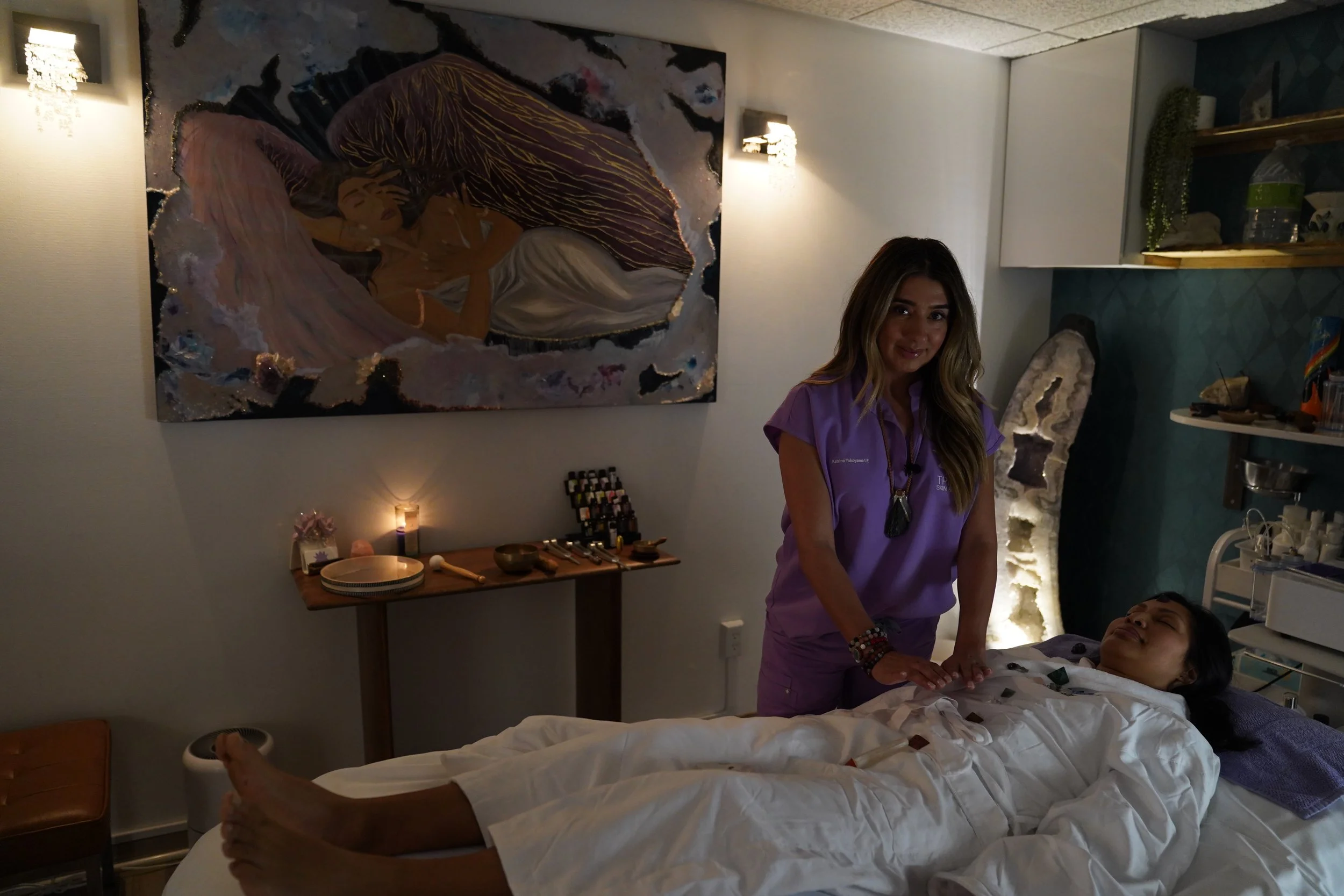
Responsible sound practice means knowing what your tools actually are — not just what they look like or sound like but what frequency they carry and how that frequency interacts with the nervous system.
It means sourcing your instruments with the same intentionality you bring to your sessions — understanding where they came from, how they were made, and whether the quality of the instrument reflects the quality of the work you are committed to delivering.
It means assessing before every session — reading the client's current state, their capacity, their nervous system's readiness to receive — and letting that assessment determine everything you reach for.
It means building a protocol around your sound work that is as deliberate and as informed as any other therapeutic discipline. Not a script you follow for every client — a living understanding of your tools that you apply with discernment, session by session.
And it means doing your own inner work — continuously — so that what you bring into the sound healing space is clarity, not projection. Presence, not performance. Genuine service to the person in front of you, not a display of your gifts.
The Standard This Work Deserves
Anyone can play a bowl.
A trained sound healing practitioner understands what it does — how it interacts with the nervous system, when to use it and when to hold back, what its contraindications are, and how to read a client's readiness before a single note is played.
The people who trust us with their bodies, their nervous systems, and their healing deserve that level of knowledge behind the tools we bring into their sessions. Not good vibes and good intentions. Real understanding. Real assessment. Real responsibility.
That is the standard Deva Moon Academy is built around. And it is the standard every sound healing practitioner in this space deserves access to.
At Deva Moon Academy we teach sound healing as a complete therapeutic discipline — including frequency literacy, instrument knowledge, nervous system assessment, contraindications, and ethical practice. If you are ready to work at this standard, sign up to our newsletter through the link in bio for weekly education on all things Deva Moon Academy.
