
Energetic Consent and Crystal Work: Why Placing a Stone Without Explanation Is a Boundary Violation
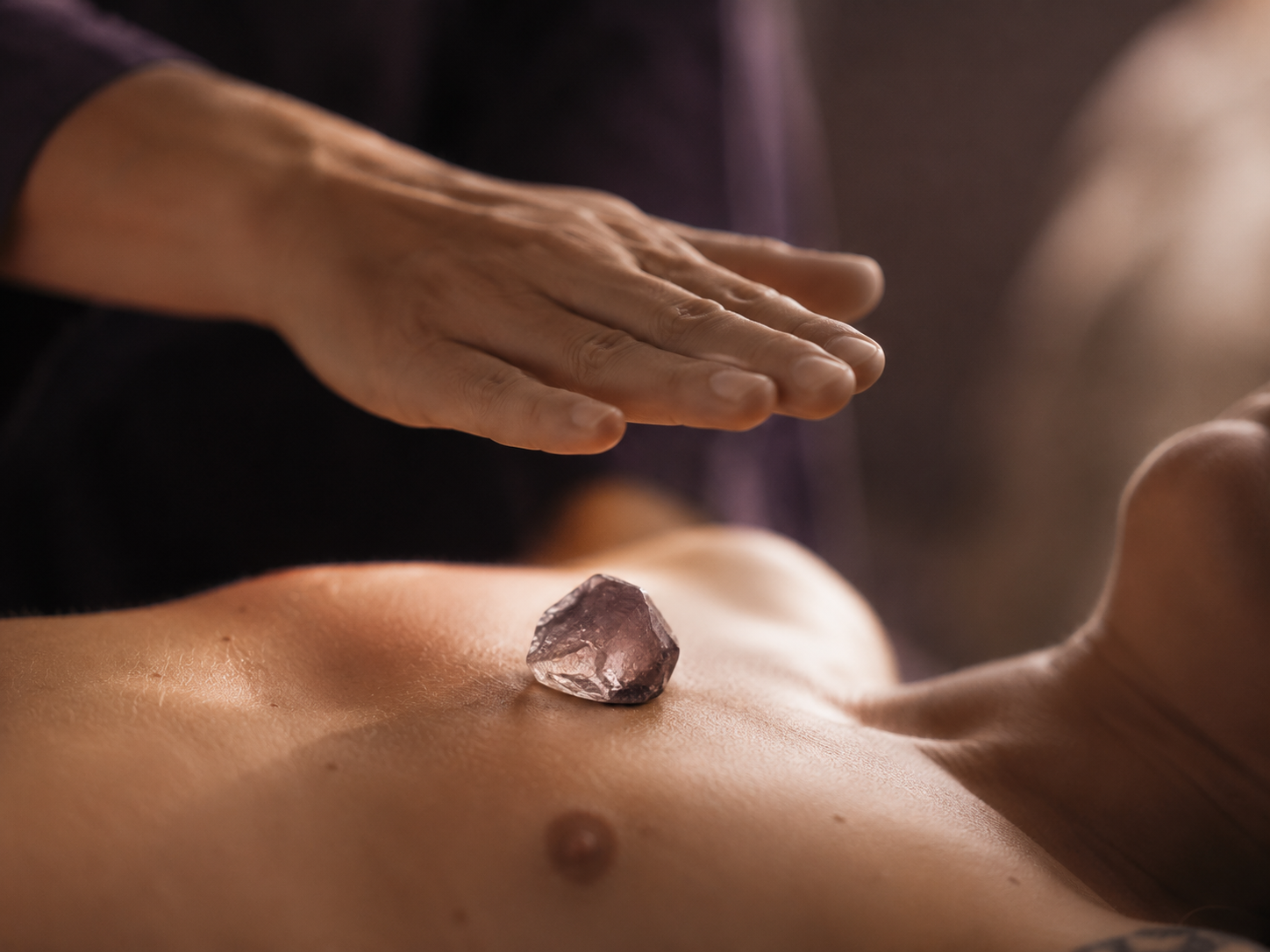
There is a moment that happens in healing spaces more often than anyone talks about.
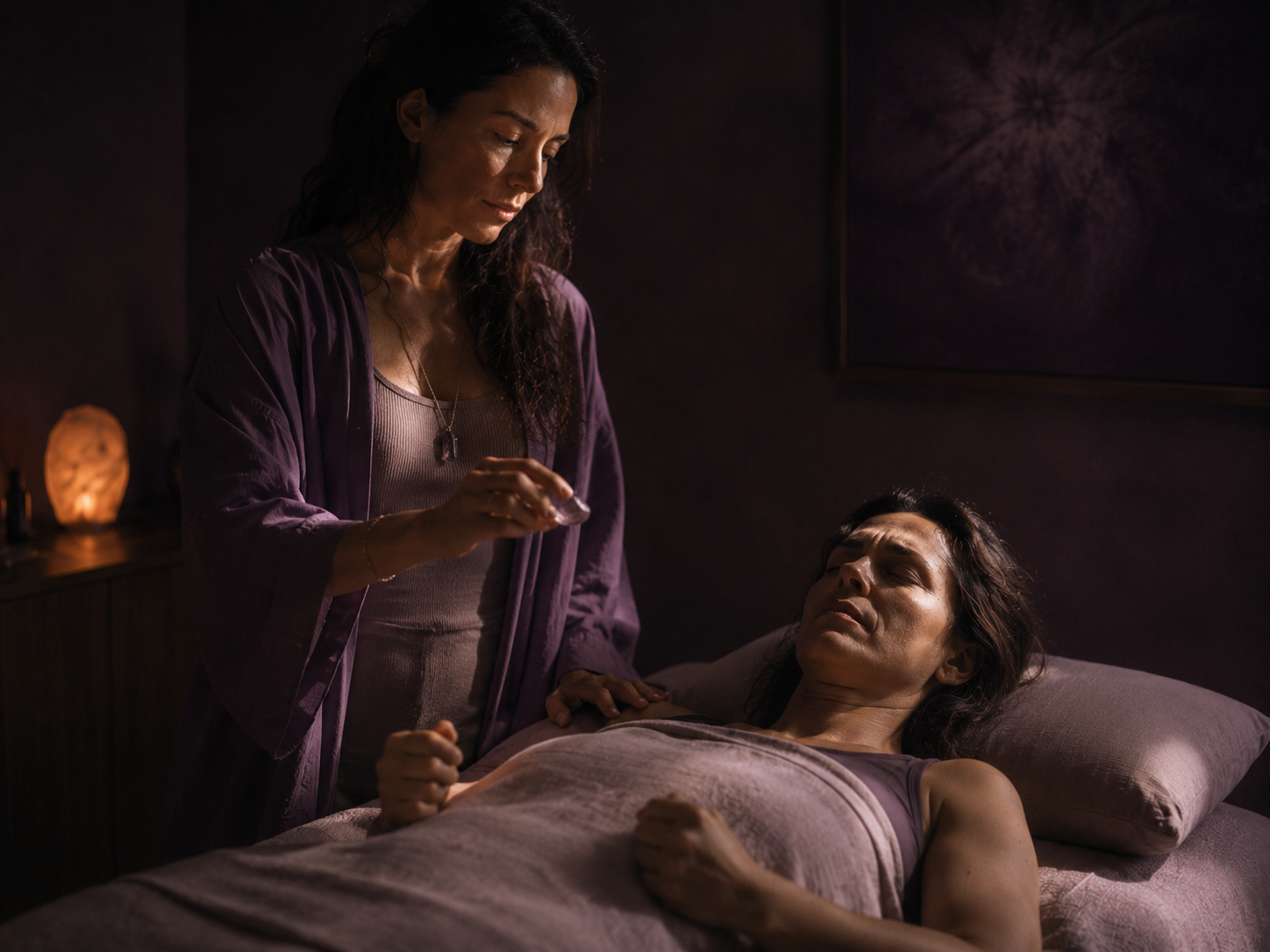
A practitioner reaches for a crystal. They place it on the client's body — or press it into their hands, or hold it near their field — without a word of explanation. No introduction. No context. No invitation. Just a stone and the assumption that because this is a healing session, the client already consented to whatever comes next.
That assumption is a boundary violation.
Not because the practitioner meant harm. Not because the crystal was the wrong choice. But because the person on that table did not know what was being introduced into their field, why it was chosen, what it might do, or whether they wanted to receive it. And in that gap — between the practitioner's intention and the client's informed agreement — something important gets lost.
Consent in crystal work is not a bureaucratic formality. It is not covered by an intake form or implied by the fact that someone booked a session. It is an ongoing, in-the-moment practice of honoring another person's right to know what is entering their body and their energy field — and to say yes or no to it with full information.
This is the conversation the crystal therapy space is not having loudly enough. And it is one that matters far more than most practitioners realize.

What Energetic Consent Actually Means
Consent in energy work is layered. It operates on multiple levels simultaneously — and most practitioners are only addressing the most surface one.
The first level is the session itself. When a client books a crystal therapy appointment, signs an intake form, and lies down on your table, they have consented to receiving crystal work in a general sense. That consent is real and it matters. But it does not cover everything that happens inside the session.
The second level is the specific tools you use. Consenting to a crystal therapy session is not the same as consenting to every stone in your collection, every placement decision you make, every frequency you introduce, and every combination you design. A client who booked a grounding session did not automatically consent to an upper chakra activation. A client who said yes to crystal therapy did not automatically say yes to the particular high-frequency stone you felt guided to place on their heart center. The general consent and the specific consent are not the same thing.
The third level is moment-to-moment receptivity. Even a client who enthusiastically consented to a specific tool at the start of a session may reach a point mid-session where their system needs something different — where a stone that felt right thirty minutes ago now needs to come off, where the pacing needs to slow, where something unexpected has surfaced and the original plan no longer fits. Reading this in real time and checking in with the client — rather than proceeding on the assumption that the opening consent covers everything that follows — is part of what it means to work with genuine ethical awareness.
And underneath all of this is something even more fundamental: the right to know. Every client, in every session, has the right to know what is being placed on their body, why you chose it, what it does, and what they might experience as a result. That knowledge is not a threat to the therapeutic experience. It is a prerequisite for it.

What Happens When a Crystal Is Introduced Without Explanation
When a practitioner places a crystal on a client without any explanation, several things happen simultaneously — most of them working against the intended outcome of the session.
The client's conscious mind goes on alert. Even in a deeply relaxed state, the nervous system registers a new sensation, a new energy, something introduced without context. Without explanation, the mind begins searching for meaning — what is this, why is it there, should I be concerned — which pulls attention out of the receptive state that makes energy work effective and into a low-grade vigilance that undermines everything you are trying to create.
The client cannot give real consent to something they do not understand. This is not a minor detail. Informed consent is not just an ethical concept — it is a neurological one. A client who feels safe, informed, and in agreement with what is happening in their session has a nervous system that is open and receptive. A client who is uncertain about what is being done to them has a nervous system that is at least partially in protection mode, which is precisely the state that makes deep energetic work most difficult.
The power dynamic inherent in a healing session gets amplified. A client lying on a table is already in a vulnerable position — physically, emotionally, and energetically. The practitioner holds significant authority in that dynamic. When a practitioner uses that authority to introduce tools without explanation rather than with transparency, they are exercising power over a client's body and energy field in a way that the client did not meaningfully agree to. Even when this is entirely unconscious, it is still a misuse of the practitioner-client dynamic.
And perhaps most importantly — what cannot be agreed to cannot be fully received. The most beautifully chosen stone, placed with the most genuine intention, will not produce its best work on a nervous system that does not feel safe. Explanation creates safety. Safety creates receptivity. Receptivity is what makes the work actually work.

Where This Shows Up Most
This is not an edge case. It is one of the most normalized patterns in crystal therapy — and once you start looking for it, it is everywhere.
It shows up as practitioners placing stones mid-session while working in silence, treating the crystal selection as an internal intuitive process that the client has no part in. It shows up as tools introduced with a brief "this will help you" and nothing more — which is not explanation, it is instruction. It shows up as practitioners pressing a stone into a client's hands as they leave and telling them to keep it on their nightstand, without asking whether the client wants it, understands it, or is in a state to receive its frequency at home without guidance.
It shows up at events, gatherings, and in casual wellness spaces — practitioners reaching for a stranger's crystal jewelry to "feel the energy," placing stones on people they have just met because they "felt called to," offering unsolicited energetic assessments and crystal recommendations to people who came to socialize, not receive a session.
It shows up in the language practitioners use to describe their choices — "I was guided to use this," "spirit told me this was what you needed," "I just knew this stone was for you" — language that frames the practitioner's intuition as the highest authority in the room and leaves no space for the client to say actually, I would rather not.
And it shows up in the treatment of personal objects. A client's crystals, amulets, jewelry, and sacred objects are extensions of their energy field. Touching, moving, or working with them without explicit permission is not a small thing — even if it is done with complete love and good intention.
Why "I Was Guided To" Is Not Informed Consent
This is the part that tends to create the most resistance. So let's address it directly.
Intuition is real. The ability to sense what a client needs — to feel which stone is right, to know which frequency will support them most in this moment — is a genuine and valuable practitioner skill. This is not an argument against trusting your intuition. It is an argument for understanding what intuition is and is not qualified to do on its own.
Intuition tells you what might serve the client. It does not tell you whether the client is ready to receive it. It does not tell you whether they have the capacity to process what it might open. It does not override their right to know what is being introduced into their field and to make an informed choice about whether to receive it.
The phrase "I was guided to use this" — delivered to a client instead of an explanation — is a subtle but real way of placing the practitioner's spiritual authority above the client's autonomy. It frames the choice as coming from somewhere beyond either person, which makes it nearly impossible for the client to question or decline without seeming to resist their own healing.
This is spiritual bypassing of the consent conversation. And it is one of the most common ways boundary violations get spiritualized into something that sounds like service.
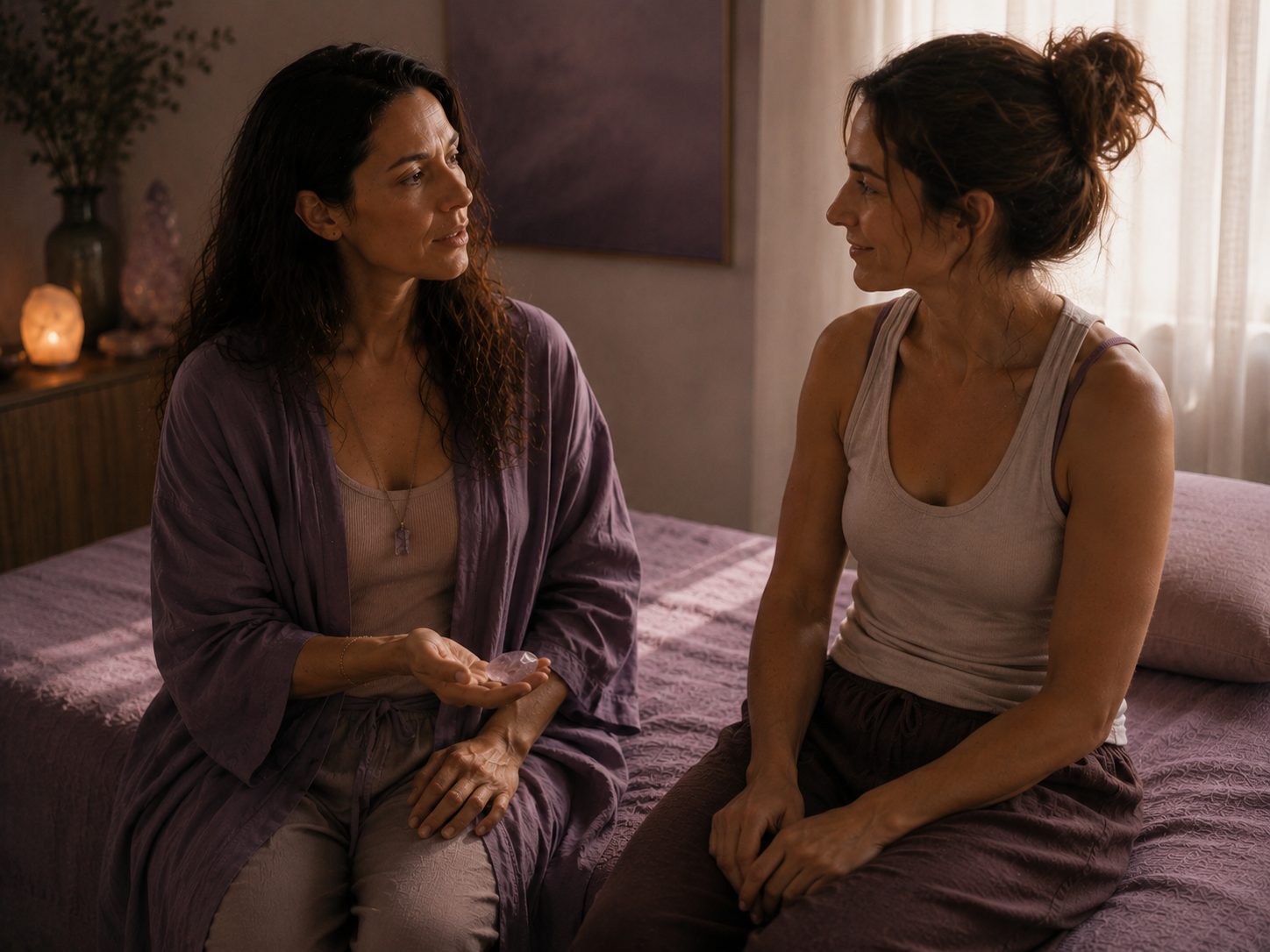
Honoring your intuition and asking for consent are not in conflict. They sound like this: "I am feeling drawn to use black tourmaline in this area today — it tends to support grounding and nervous system regulation. Does that feel right for where you are today?" That sentence honors the intuitive guidance and gives the client everything they need to make an informed choice. It takes ten seconds. It changes everything.

The Nervous System Case for Consent
Beyond the ethical dimension, there is a purely practical argument for why consent and explanation produce better outcomes in crystal therapy sessions.
The nervous system is the primary instrument of energetic work. Everything you are trying to accomplish — regulation, release, clearing, activation, integration — happens through and in the nervous system. And the nervous system is exquisitely sensitive to the quality of safety in its environment.
When a client does not know what is being placed on their body, their nervous system has to decide whether it is safe without the benefit of context. Most clients in that situation will not go into a full threat response — but they will maintain a low-grade vigilance, a part of their awareness monitoring the unknown rather than fully surrendering to the process. That vigilance is not dramatic. It is often invisible. But it is the single most effective thing that can prevent a client from accessing the depth of receptivity that makes crystal work genuinely transformative.
Explanation eliminates the unknown. When a practitioner says "I am going to place this stone on your heart center — it supports gentle emotional opening and tends to feel warm and calming" — the client's nervous system has everything it needs to settle. It knows what is coming. It understands the intention. It can release the monitoring function and drop into genuine receptivity.
That drop is where the work happens. The explanation is not the preamble to the therapy. The explanation is part of the therapy.
What Informed Consent in Crystal Work Actually Looks Like
Consent in crystal work does not need to be formal, clinical, or disruptive to the flow of a session. It needs to be genuine, clear, and consistent. Here is what that looks like in practice.
Before you place any stone, say what you are doing and why. Not in technical language necessarily — in whatever language fits your practice and your client. "I want to use this piece of selenite to help clear some of the energy that has been building up — you might feel a gentle lightness or some tingling. Is that okay with you?" That is enough. That is everything.
Explain what the client might experience. Not every possible effect in exhaustive detail — just enough that they are not surprised. "This one tends to bring up emotion sometimes — if that happens, that is completely normal and we can slow down anytime you need." This kind of preparation does not create the experience you are describing. It creates safety around the possibility of it.
Read their response to the explanation before you proceed. Consent is not just verbal. Watch the body. A client who says yes while subtly tightening, pulling back, or avoiding eye contact is telling you something their words are not. Trust the body over the words. Ask a follow-up question. Give them genuine permission to decline.
Build consent into your intake process. Before the session begins, walk through the tools you typically use — which stones, what they do, what clients commonly experience — and invite questions. This does not replace in-session consent but it creates a foundation of transparency that changes the quality of everything that follows.
When a client hesitates or declines, receive that gracefully and without pressure. "Absolutely, we can skip that one entirely" or "we can try a gentler option" — and mean it. A client who knows their no will be respected is a client who can fully trust their yes.

Crystals in Public Spaces and Non-Session Contexts
The consent conversation does not end at the treatment room door.
Everything discussed above applies equally — and arguably more urgently — in public spaces, wellness events, social gatherings, and casual encounters. The absence of a formal session does not create permission to enter someone's energetic field with your tools, your unsolicited perceptions, or your stones.
Reaching for another person's crystal jewelry to feel the energy without asking is a boundary crossing. Pressing your own stone into someone's hands because you feel they need it is a boundary crossing. Walking up to a stranger at an event to tell them which crystal would help their energy is a boundary crossing. All of these things happen constantly in wellness culture. All of them are normalized to a degree that makes them nearly impossible to push back against without seeming difficult or closed.
The practitioner's path is to refuse to participate in that normalization — not by criticizing others, but by holding a different standard in your own behavior. Ask before you touch. Explain before you offer. Invite rather than impose. These are not complicated practices. They are just consistent ones.
Your personal collection of crystals, your sense of what someone needs, your intuitive read of their field — none of these create an entitlement to another person's space. The invitation has to come first. Every time.
The Bigger Picture
When practitioners make energetic consent a consistent, non-negotiable part of their crystal work, something shifts in the quality of the work itself — and in the quality of the trust clients bring to it.
Clients who feel informed, respected, and in genuine agreement with what is happening in their sessions do not just feel safer. They go deeper. They release more fully. They integrate more completely. They come back. They refer others. They speak about their practitioner not just as someone skilled but as someone they genuinely trust — which is a far rarer and more valuable thing in the healing space than skill alone.
And something else happens that is equally important — the client stops placing their healing in the practitioner's hands and starts claiming it as their own. When a client is informed, when they understand what each tool does and why it is being introduced, when they are invited into the process rather than receiving it passively — they become an active participant in their own healing rather than a recipient of someone else's. That shift is profound. It builds the kind of internal agency that lasts long after the session ends, and it removes the dynamic of dependency that so much of the wellness space accidentally creates. A client who feels empowered in their own healing does not need to project that responsibility onto the practitioner. They carry it themselves. And that is exactly where it belongs.
The practitioners who build that kind of trust are not the ones who know the most stones or design the most elaborate layouts. They are the ones who never forget that the person on the table is a full human being with the right to know what is happening to their body — and who build that knowing into every single session, every single time.
That is not a ceiling on what crystal therapy can do. It is the foundation that makes the best of what it can do actually possible.
This is what integrity looks like in practice. Not as a concept, not as a value stated on a website — but as a living habit that shows up in the ten seconds before you reach for a stone and ask a client whether they are ready to receive it.
Those ten seconds are the difference between a practitioner who assumes and a practitioner who earns trust. Be the second one.
At Deva Moon Academy, energetic consent is not a module in the curriculum. It is woven into every teaching, every protocol, and every conversation about what it means to work with another person's energy responsibly. If you are ready to build a crystal practice rooted in this level of integrity, our free Practitioner Guide is where we start. Link in bio.
