
The Crystal Therapy Guide Nobody Gave You: What Every Practitioner Needs to Know Before Working With Stones Professionally
Let's be honest about something.
Most of what gets taught about crystals in the wellness space is incomplete. Not wrong necessarily — but incomplete in a way that becomes a real problem the moment you move from personal use to professional practice.
You learned which stones correspond to which chakras. You learned their general properties — this one for love, this one for protection, this one for clarity. You may have learned how to cleanse them, charge them, set intentions with them. And all of that is a beginning.
But it is not enough to work with crystals on another person's body, nervous system, and energy field with genuine safety and skill.
The piece that got dropped — in almost every book, workshop, and training available in the mainstream wellness market — is the piece that matters most when someone else is lying on your table trusting you with their energy. How crystals actually work on a physiological and energetic level. How to read the person in front of you before you reach for a single stone. How combinations interact with each other and what can go wrong when they conflict. How to recognize when a session has gone past the edge of what you are qualified to hold.
This guide exists because that education gap is causing real harm. And because the practitioners who are serious about this work — the ones who want to build practices rooted in genuine skill, genuine safety, and genuine integrity — deserve better than what the standard curriculum has been offering them.
This is what nobody gave you. Consider this the beginning of getting it.
What Crystals Actually Are
Before anything else, let's establish the foundation.
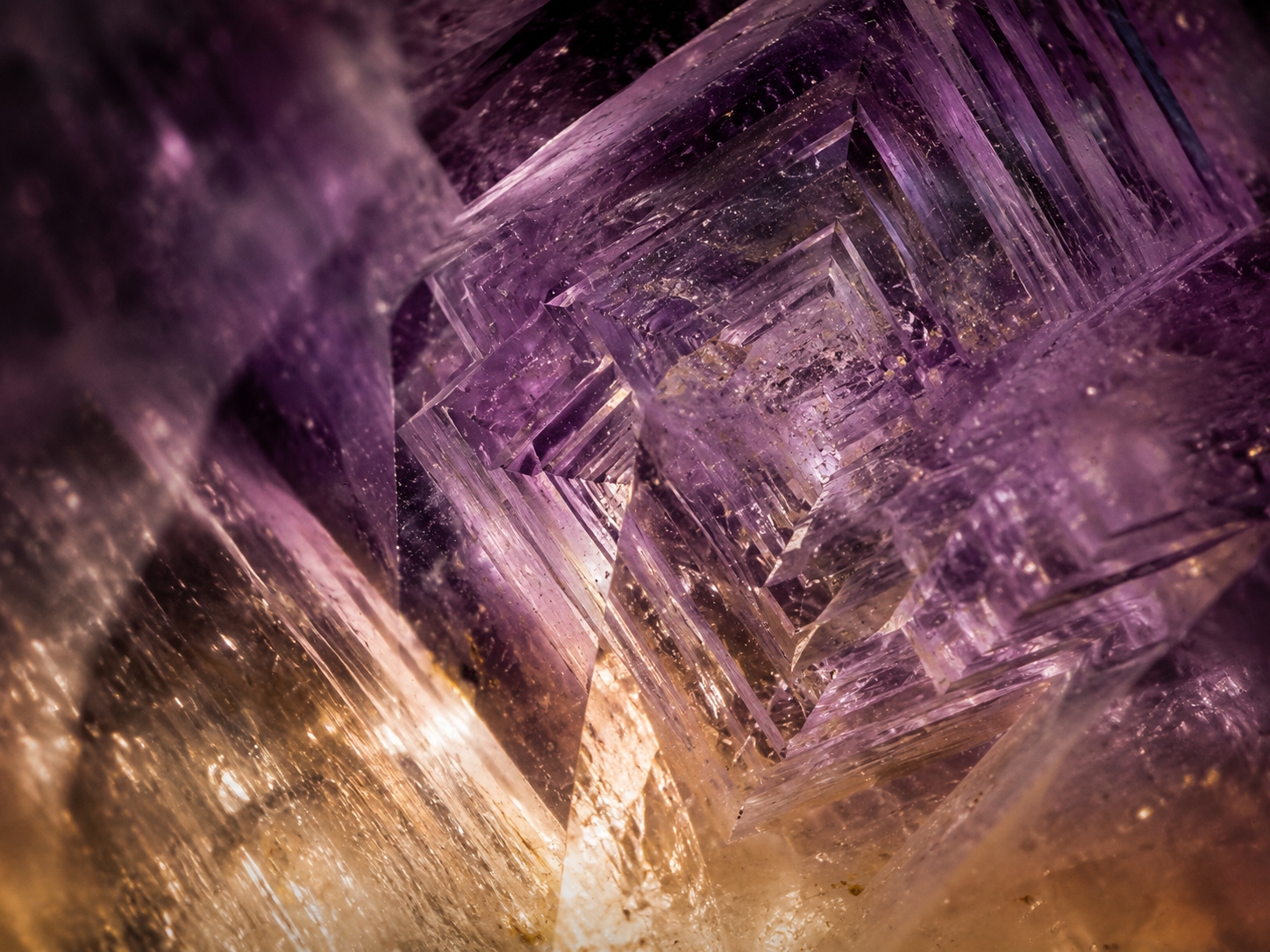
A crystal is not simply a beautiful rock. It is a mineral formation with a precise, repeating molecular structure that gives it a stable and measurable vibrational frequency. This is not mystical language — it is chemistry and physics. The same principle that makes quartz crystals essential components in watches, electronics, and medical equipment is the principle behind their use in energy work. Quartz oscillates at a precise and consistent frequency. Its piezoelectric properties — the ability to generate an electric charge in response to mechanical stress — are documented, measurable, and widely applied in modern technology.
Every mineral formation has its own structural composition and therefore its own distinct vibrational signature. That signature is not random. It is determined by the specific combination of elements present in the stone, the conditions under which it formed, and the geometric structure of its crystalline lattice. Different structures produce different frequencies. Different frequencies produce different effects on the fields they interact with.
This is the foundation of therapeutic crystal work. Not the poetic associations we have layered onto the stones over centuries — though those associations often have a real basis — but the underlying physical reality that these are objects with measurable energetic properties that interact with other energetic fields in predictable ways.
Understanding this changes everything about how you approach your work. It moves crystal therapy out of the realm of intuition and aesthetic preference and into the realm of a disciplined practice with real principles, real protocols, and real consequences when those principles are ignored.
How Crystals Interact With the Body
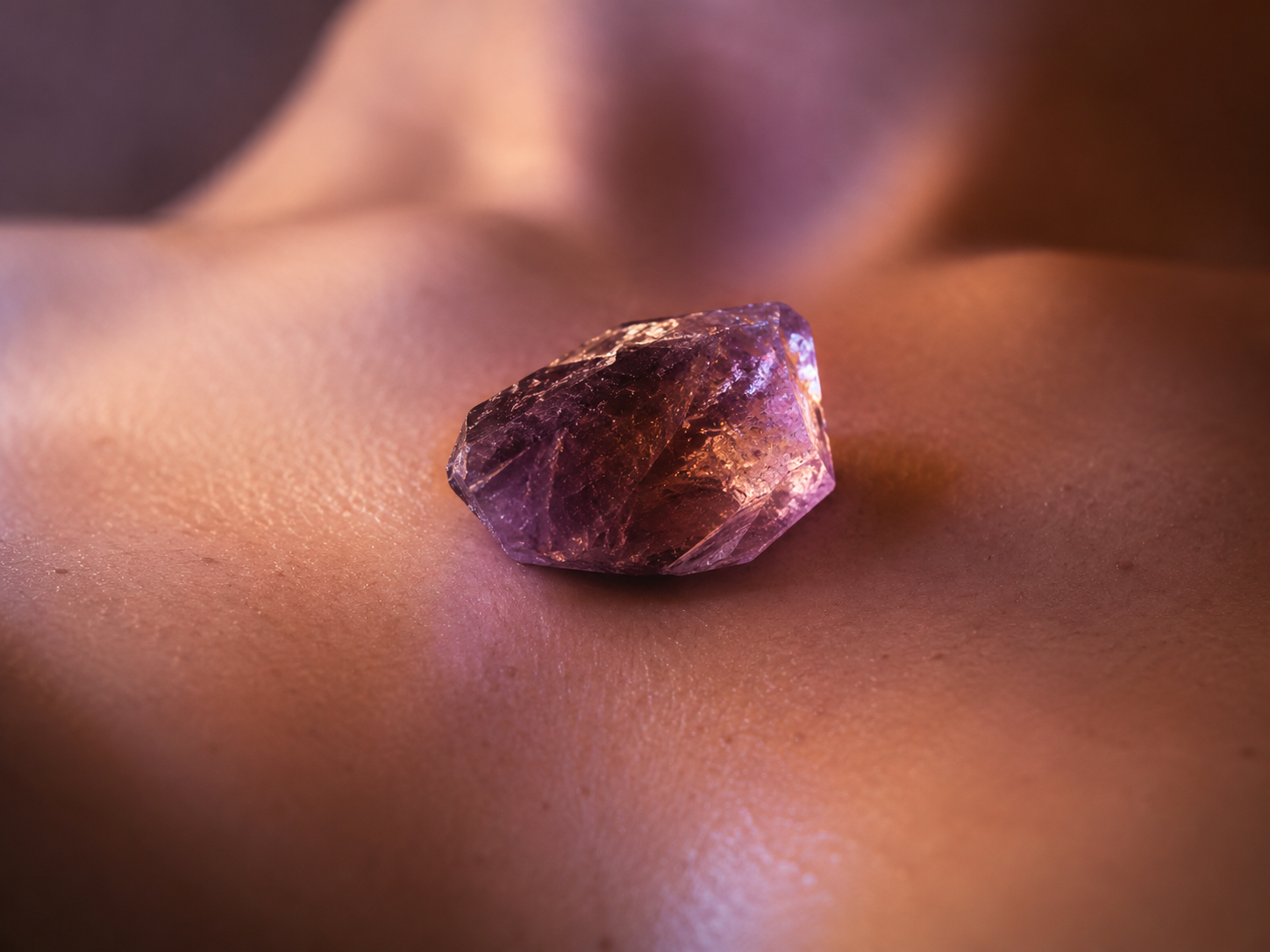
When a crystal is placed on or near the body, its frequency interacts with the body's own electromagnetic field — the biofield, a measurable field of energy that surrounds and permeates the physical body and has been the subject of increasing scientific study over the past several decades.
This interaction is not passive. Depending on the stone, the frequency it carries, and the current state of the person receiving it, that interaction might do any of the following:
It might ground and slow the nervous system down — reducing activation, bringing the body into a more regulated and receptive state. It might activate and accelerate energy movement — increasing circulation through the energy centers, bringing stored material toward the surface. It might draw stagnant or dense energy upward and outward from the body. It might amplify whatever emotional or energetic state is already present. Or it might create a kind of frequency conflict — an interaction between the stone's energy and the client's current state that produces confusion, agitation, or overwhelm rather than the intended effect.
That last possibility is the one that gets almost no attention in standard crystal education. And it is the one responsible for most of the unintended harm that happens in crystal therapy sessions.
The amplification effect deserves particular attention here. Many of the most commonly used crystals — clear quartz, selenite, moldavite, high-frequency stones associated with upper chakra activation — have a strong amplifying quality. They intensify whatever is present in the field they interact with. When the client is in a stable, regulated, and receptive state, that amplification can produce profound results. When the client is carrying unprocessed grief, anxiety, trauma, or emotional overwhelm just beneath the surface, that same amplification can remove the lid from something they were not prepared to look at — in a room that may not be equipped to hold it, with a practitioner who may not be trained to navigate what follows.
A crystal does not discriminate between what it amplifies. It responds to what is present. Which means your assessment of what is present — before any stone goes on the body — is not optional. It is the entire foundation of safe practice.

Reading the Client Before You Reach for a Stone
This is the part of crystal therapy that almost no one teaches. And it is the most important part.
Before you design a layout, before you select a stone, before you introduce any frequency into a client's field — you need to assess the person in front of you. Not theoretically. Not based on what they booked or what they said they want. In real time, in this session, on this specific day.
Here is what that assessment actually involves.
Their current nervous system state. How did they walk in? What is the quality of their presence — regulated and grounded, or activated and scattered? Is their breathing shallow or full? Are they making eye contact or looking away? Is their body language open or protective? A client who arrives already dysregulated — whether from a stressful day, a difficult conversation, an anxiety flare, or a trauma trigger they may not even be aware of — has a very different starting point than one who arrives settled and receptive. Your entire session design needs to reflect that difference.
Their history with energy work. A first-time client has a nervous system with no reference point for what certain crystal frequencies feel like. What a seasoned practitioner or long-term energy work client can receive without difficulty can completely overwhelm a nervous system encountering these sensations for the first time. First sessions should always be calibrated toward the lighter end of the frequency spectrum — introductory, exploratory, and slow. Trust is built before depth is invited.
What this specific session is for. Not what the client generally wants from their work with you — what this session, today, is specifically designed to support. Grounding and nervous system regulation requires a completely different stone selection than emotional release work. Energetic clearing requires different tools than heart opening. Spiritual activation requires a different protocol than trauma support. Using the same layout for every client regardless of their current state and the session's specific intention is not protocol. It is habit dressed up as practice.
Whether their system is ready for what a particular stone might open. This is the question most practitioners never ask. Some stones — particularly high-frequency stones associated with the upper chakras, with transformation, with energetic acceleration — can initiate openings that a client's nervous system, emotional state, or current life circumstances are not prepared to integrate. The session ends. They go home. And over the next several days they move through something disorienting and destabilizing without the context to understand why. That is not a sign the crystal worked. That is a sign the practitioner did not read the room.
Learning to ask this question before every session — and to trust what you observe in the body over what you believe should happen — is one of the most important skills you will ever develop as a crystal practitioner.

Start Here: Free Chakra Guides + Ritual Starter Kit
If you are building your crystal practice from the ground up, understanding the chakra system is the foundation everything else sits on. We put together a set of free PDF guides covering chakra alignment, crystal placement, and practitioner preparation — designed to walk you through how to work with the energy centers correctly before any stone goes on a body.
Sign up below to receive the guides directly to your email. Everyone who signs up is also automatically entered into our giveaway for a Chakra Ritual Starter Kit — including a chakra crystal stone set and a custom energetic protection spray.
Understanding Crystal Frequencies
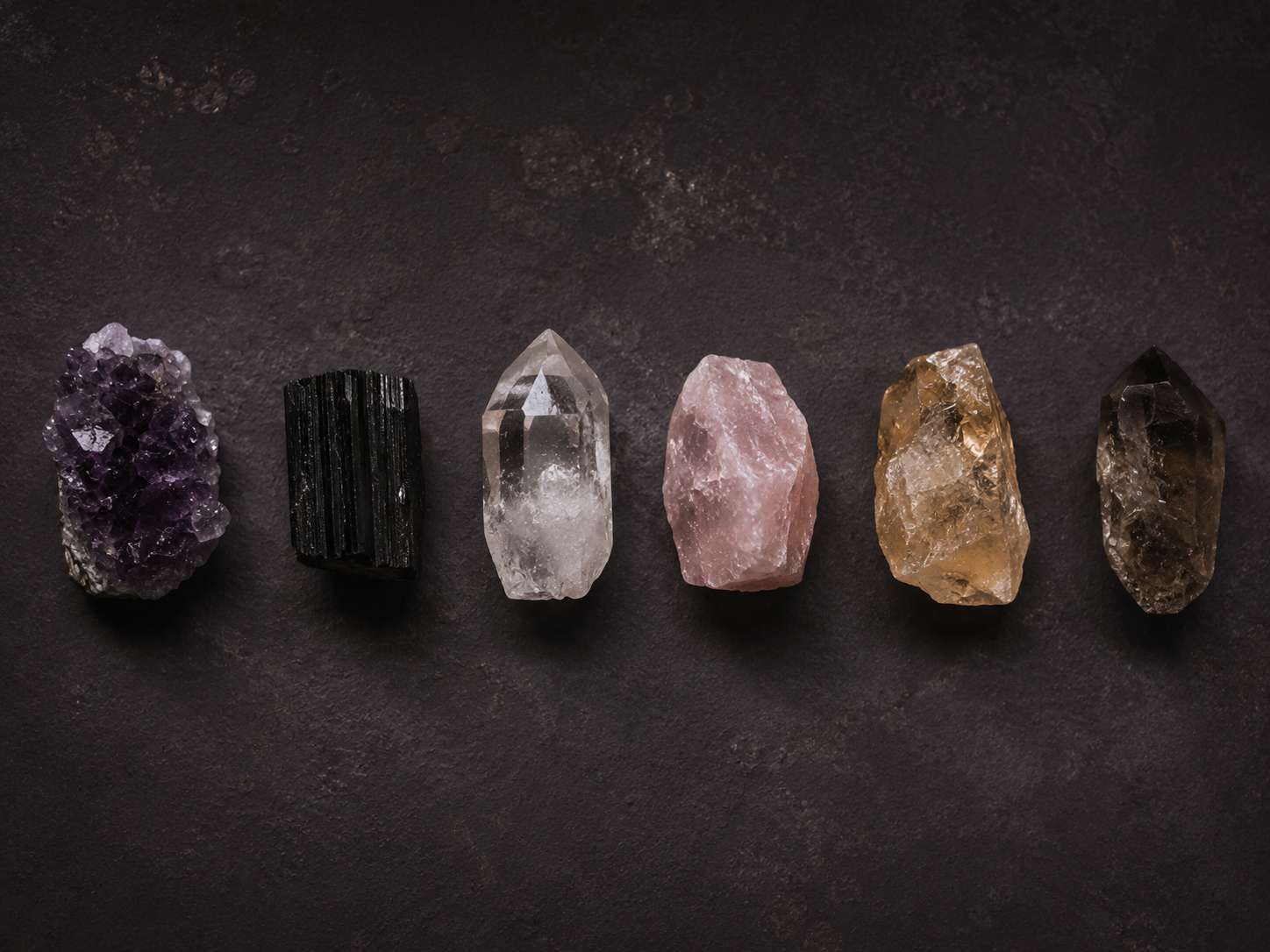
Not all crystals are the same. This sounds obvious when stated plainly — but the way most practitioners approach stone selection suggests it is not as understood as it should be.
Each stone carries a distinct frequency with specific qualities that go well beyond its general association. Understanding those qualities at a practical level — not just what a stone is "for" but how it moves, how fast it works, in which direction it tends to move energy, how strongly it amplifies, and under what circumstances it is contraindicated — is the foundation of informed crystal selection.
Here is a practical framework for thinking about crystal frequencies that you can apply directly to your session work.
Speed. Some crystals work slowly and gently, making them appropriate for sensitive nervous systems, first sessions, and clients who are in a tender or vulnerable state. Others work quickly and powerfully, producing rapid energetic shifts that require a regulated, prepared system to receive safely. Matching the speed of your tools to the capacity of the person in front of you is a fundamental protocol decision.
Direction of energy movement. Some stones move energy upward — activating upper chakras, bringing stored material toward conscious awareness, accelerating spiritual perception. Some move energy downward — grounding, anchoring, connecting to the earth, stabilizing a scattered system. Some draw energy outward from the body — clearing, releasing, extracting what no longer serves. Some push energy inward — consolidating, protecting, creating containment. Knowing which direction a stone tends to move energy, and whether that direction is appropriate for this client in this session, is not a minor detail. It determines the entire effect of the work.
Amplification quality. As discussed earlier, many crystals amplify whatever is present in the field. High-amplification stones — clear quartz being the most commonly used example — should be used thoughtfully and with full awareness of what they might intensify. When used skillfully on a prepared client they can dramatically enhance the effectiveness of a session. When used without assessment on an unprepared client they can intensify exactly what you were hoping to help them release.
Contraindications. Every stone has them. Certain crystals are not appropriate for use during pregnancy. Others are contraindicated for clients with specific mental health conditions, active trauma processing, or extreme nervous system dysregulation. Some stones should not be combined with certain medications or medical conditions. This is not fear-mongering — it is the same level of professional diligence that any skilled therapeutic practitioner applies to their tools and techniques. Knowing the contraindications for the stones you work with is a professional responsibility, not an optional extra.
Crystal Combinations and Layout Design
Single stone work is one conversation. Multi-stone layouts are another entirely.
When you place multiple crystals on a client simultaneously, you are not simply adding their individual properties together. You are creating an energetic field shaped by how those frequencies interact with each other — and the result is not always predictable based on the properties of each stone in isolation.
Some combinations are deeply harmonious. The frequencies complement and enhance each other, creating a coherent field that supports the session's intention in a way that no single stone could achieve alone. These are the combinations worth learning and building your protocol library around.
Some combinations create conflict. The frequencies pull in different directions — one grounding while another activates, one opening while another closes, one drawing energy up while another pushes it down. The client's body has to work against the incoherence of the field rather than with it. These combinations are not just less effective. They can actively interfere with the session.
And some combinations — particularly those involving multiple high-frequency or high-amplification stones — are simply too much for most clients to receive safely. They create a level of energetic acceleration that requires an exceptionally stable and experienced system to process without becoming overwhelmed.
Understanding crystal combinations means developing a working knowledge of frequency compatibility — which stones harmonize, which amplify specific qualities in each other, and which pairings are contraindicated for certain states and conditions. This knowledge takes time and real study to develop. It cannot be replaced by intuition alone — though intuition, once you have the foundational knowledge, becomes an increasingly valuable refinement tool.
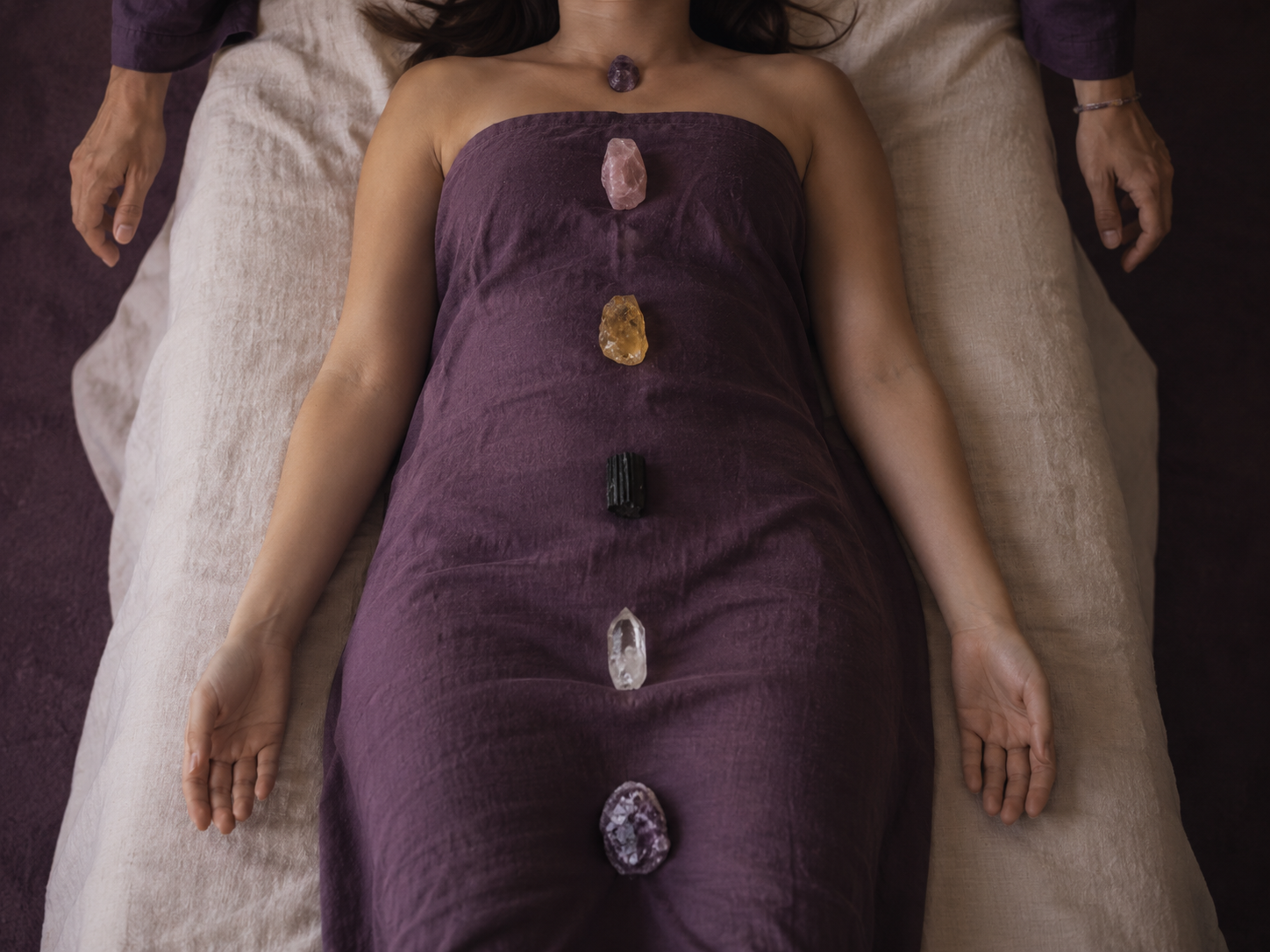
When designing a layout, start with the session's specific intention and work backward. What does this person's nervous system need first — grounding, regulation, clearing, or activation? What sequence of frequencies will support that progression safely? Which stones carry those frequencies in a way that is appropriate for this client's current state and capacity? Where on the body does each stone belong — and in what order should they be placed and removed?
These are the questions that turn a decorative arrangement into a therapeutic protocol.

Placement — What It Actually Means
Where you place a crystal on the body matters as much as which crystal you choose.
The body's energy centers are not decorative landmarks. They are functional points in the body's energetic anatomy — each associated with specific physiological, emotional, and energetic processes. Placing a stone directly on an energy center is a deliberate act of frequency introduction. You are asking that center to interact with the stone's energy in a direct and often accelerated way.
That interaction needs to be appropriate for what is currently happening in that center. For this client. Today.
A client in emotional overwhelm does not need a heart-opening stone placed directly on their heart center — the heart center is already at capacity. A client who is ungrounded and disconnected from their body does not need upper chakra activation before their lower chakras are stable. A client in the middle of processing grief or trauma does not need an energetic clearing layout that will move things faster than their system is equipped to handle.
The sequence matters enormously. In most cases — and especially with clients whose nervous systems are sensitized, dysregulated, or carrying significant emotional material — the foundational principle is ground first, open second. Build the container before you invite anything into it. Establish stability before you introduce movement. This is not a rigid rule that applies identically to every session. It is a governing principle that should inform every placement decision you make.
Pacing matters equally. How long a stone remains on the body affects how deeply its frequency penetrates and how much of an effect it produces. A client who needs gentle support can be overwhelmed by a stone left in place too long. A client who needs more significant work may need a longer contact time to receive the full benefit. Learning to read how a client is responding to a placement — and adjusting timing accordingly — is a skill that develops over time and with real attention to the subtle signals the body sends throughout a session.
Scope of Practice — The Non-Negotiable Conversation
No guide to professional crystal work would be complete without this conversation. And it is one I am going to have directly.
Crystal therapy can support profound healing. It can help regulate the nervous system. It can create conditions in which stored emotional material becomes more accessible and processable. It can support the body's innate capacity to return to balance. It can provide a sense of safety, groundedness, and connection that many clients find deeply therapeutic.
It can also open things.
When a session opens things that are rooted in clinical trauma — when crystal work inadvertently initiates a trauma response, a dissociative episode, or an emotional flooding that the client has no framework to understand — that is beyond the scope of what crystal therapy should navigate alone. That requires clinical training. It requires the kind of therapeutic container that licensed mental health professionals are specifically trained to provide.
We are not licensed therapists. We are not psychologists or clinical trauma specialists. That boundary is not a diminishment of the power or value of crystal work. It is a professional and ethical reality that protects both our clients and ourselves.
Part of building a responsible crystal practice is maintaining a referral network of licensed mental health professionals — therapists who understand and respect holistic and energy-based approaches, who can provide the clinical support that what our sessions may surface sometimes requires. And it means being willing to say — clearly, without apology — "what is coming up for you in our sessions would be really well supported by working with a therapist alongside what we are doing here."
That is not an admission of limitation. That is the mark of a practitioner who understands exactly what they are doing and exactly what they are not.

Building a Crystal Practice Rooted in Integrity
Everything in this guide points toward one thing: the standard that professional crystal work requires is higher than what most practitioners have been given access to. And raising that standard is not about gatekeeping the work or making it inaccessible. It is about honoring the people who trust us with their bodies, their energy, and their healing.
Building a crystal practice rooted in integrity means going back to the foundations and filling in what was dropped. It means learning the mineral and energetic properties of the stones you work with at a level beyond their general associations. It means developing a real assessment process for every client in every session. It means understanding frequency compatibility and contraindications as a living body of knowledge you apply with discernment rather than a checklist you follow mechanically.
It means sourcing your tools ethically — understanding where your stones come from, how they were mined, and whether the conditions of their sourcing align with the values you bring to your work. The energy of how something was extracted from the earth is not separate from the energy it carries into a session.
It means pricing your crystal work in a way that reflects the skill and knowledge it requires — not what you think the market will bear or what feels safe to charge, but what genuinely reflects the level of training, preparation, and responsibility you bring to every session.
And it means doing your own inner work — continuously, without treating it as optional. Because the most important frequency tool in any crystal session is not a stone. It is the practitioner. The clarity, the groundedness, the self-awareness, and the genuine commitment to the client's wellbeing rather than your own need to feel effective — these qualities are the container that everything else happens inside.
When that container is strong, everything you introduce into it — every stone, every frequency, every carefully considered protocol decision — has the conditions it needs to produce real, lasting, integrated healing. That is what this work is capable of. That is the standard it deserves.
At Deva Moon Academy, crystal therapy is taught as a complete therapeutic discipline — from foundational frequency literacy through advanced protocol design, combination work, nervous system reading, and ethical practice. If you are ready to build your crystal practice on a foundation of real knowledge and real integrity, our free Practitioner Guide is where we start. Link in bio.
